Subscriber Exclusive
Acadian Brown Cotton: Spinning a Living History
Discover how a search for community led one spinner to discover the deep historical roots of Acadian brown cotton—and how it continues build local connections today.
Discover how a search for community led one spinner to discover the deep historical roots of Acadian brown cotton—and how it continues build local connections today. <a href="https://spinoffmagazine.com/acadian-brown-cotton-spinning-a-living-history/">Continue reading.</a>
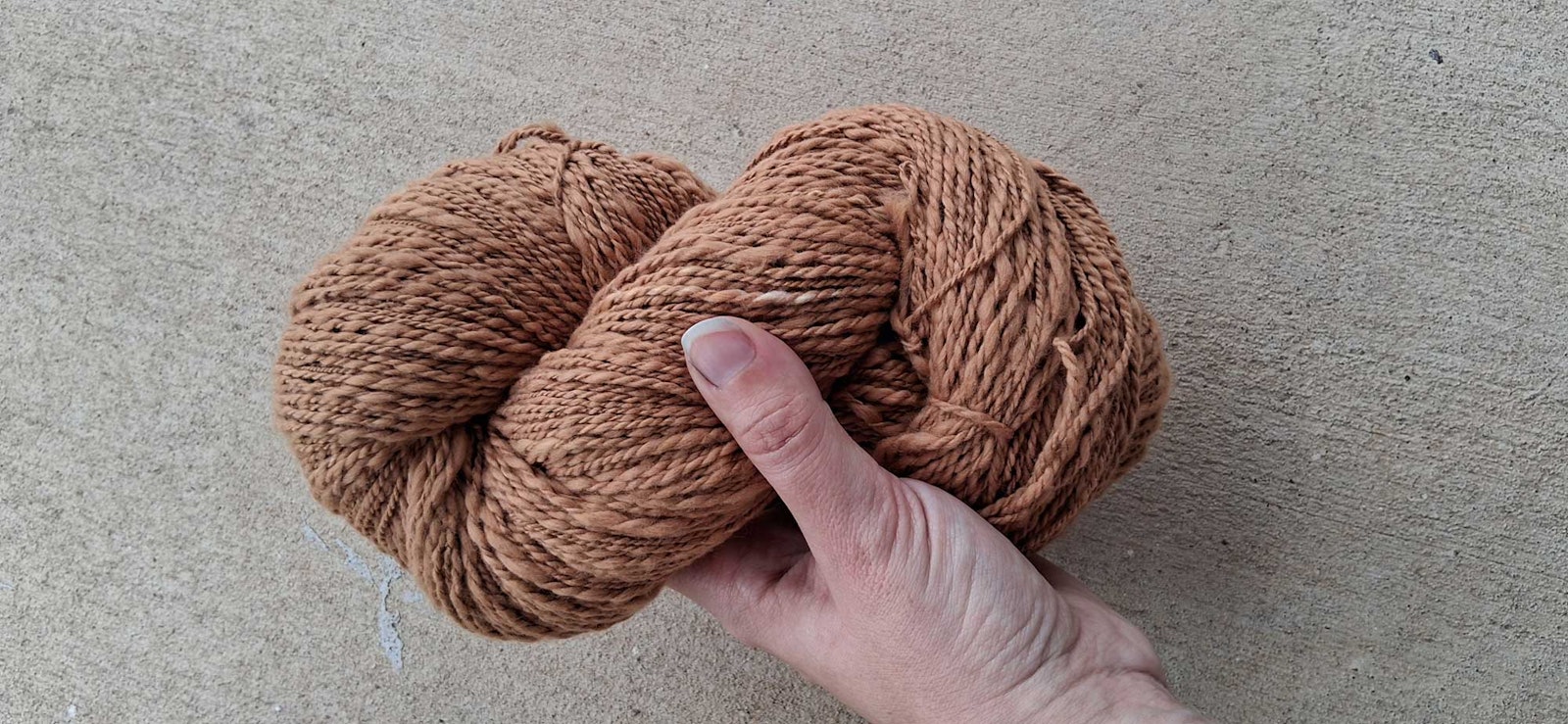
https://spinoffmagazine.com/cdn-cgi/image/format=auto/https://www.datocms-assets.com/75073/1774278157-acadian-brown-cotton-handspun-by-the-author.jpg?auto=format&w=900
Contents
I moved to Louisiana eight years ago, but it wasn’t until the pandemic in 2020 that I truly began to feel rooted here. Like many people, I focused on my home during lockdown and got into gardening and raising chickens. As a lifelong creative, I was also searching for a new interest, something soothing and tactile. Then I discovered handspinning. After only twenty minutes with a drop spindle and a YouTube video, I was hooked.
As restrictions eased, I began looking for a local spinning guild or fiber community. I joined a nearby knitting group, where a few spinners welcomed me warmly, but all of the nearest guilds were hours away. I kept spinning anyway and kept searching.
That search led me, unexpectedly, to Acadian Brown Cotton.
Cajun or Acadian?
Acadie was located in the area of Eastern Canada in what are now known as the Maritime provinces, and colonists who lived there developed a distinct culture from other French colonies. The colony was eventually controlled by Great Britain, but many Acadians refused to swear allegiance to Britain. They were deported forcefully from this area by the British from 1755–1764 in what is called the Great Expulsion, or Le Grand Dérangement. Many Acadians died as a result, but after a long and winding journey, some of them ended up in what is now Louisiana. They formed the basis of what we now know as Cajun culture. (See Further Reading.)
What is Acadian Brown Cotton?
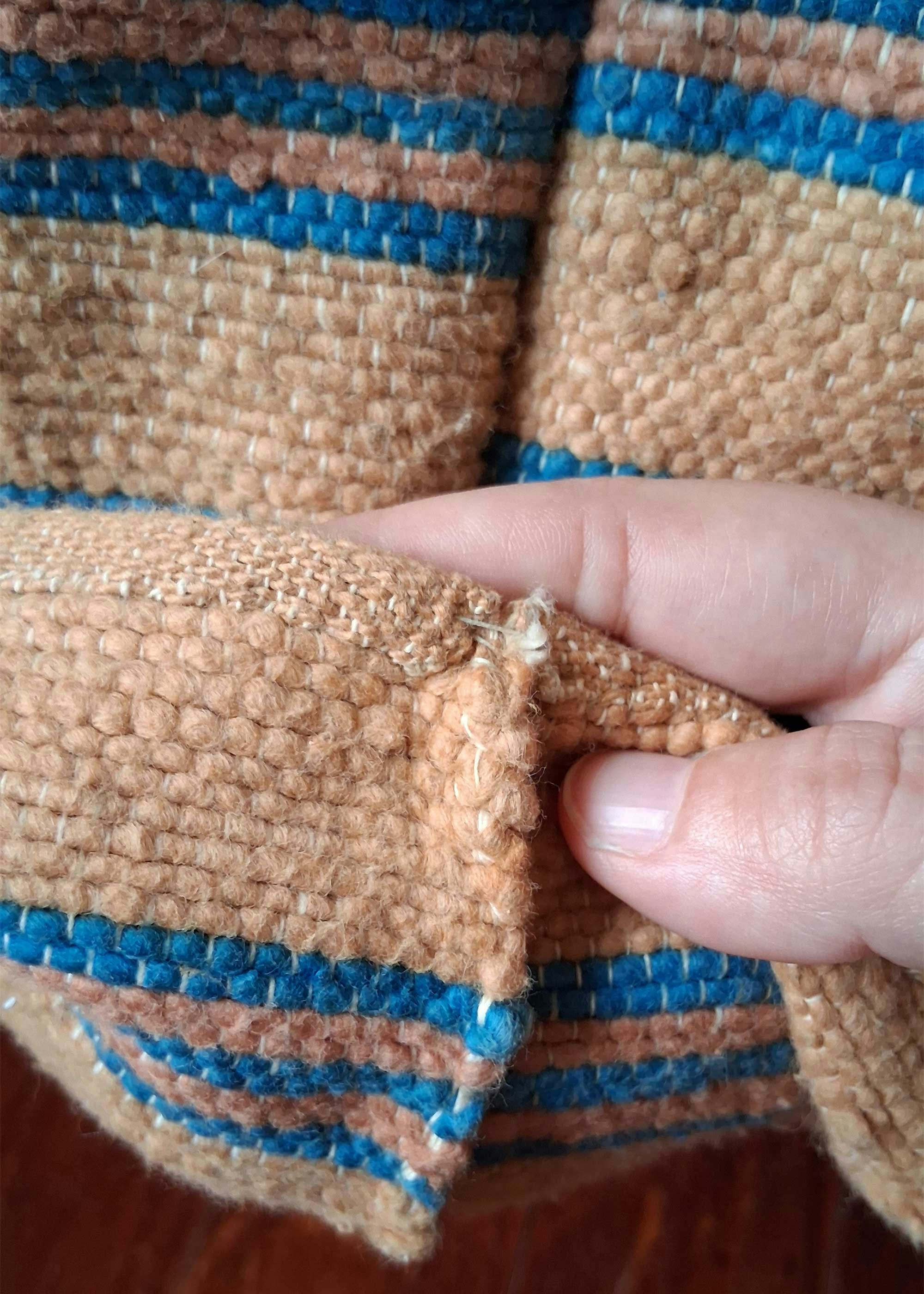
Also known as Coton jaune—yellow cotton—Acadian Brown Cotton is an heirloom variety cultivated in the Acadiana region of Louisiana for more than 200 years. Early Acadian families carefully selected and saved seed, growing cotton that thrived in local conditions and spinning it into yarn for household textiles, most notably the striped blankets that have become emblematic of Acadian material culture. Growing and weaving with this cotton remains an unbroken Acadian tradition to this day.
When I first encountered Acadian Brown Cotton on Facebook, I was immediately drawn in. As a history lover and small-scale homesteader, I was captivated by the idea of a fiber crop so deeply tied to place, memory, and women’s work, right here in Louisiana. The challenge was distance: I lived more than three hours from Acadiana. Still, the pretty brown cotton lingered in my thoughts.
Acadiana Fibershed
After starting my own fiber art business, I reached out to the Acadiana Fibershed and was introduced to Sharon Donnan, founder of the Acadian Brown Cotton nonprofit. Sharon is a textile historian and documentary film producer, and the catalyst behind the modern revival of this heritage cotton. Since 2017, her work, alongside a dedicated team of farmers and volunteers, has focused on preserving heirloom seed, supporting small-scale growers and artisans, and rebuilding a regional fiber system rooted in regenerative agriculture.
Through these efforts, Acadian brown cotton seed was banked and shared, more farmers began planting the crop, and the cotton was once again ginned and milled into roving and yarn. When that fiber became available to spinners and weavers, it sold out quickly—a clear signal that this centuries-old textile tradition still resonated.
I soon became involved as a volunteer. Despite the distance, I began traveling to spin Acadian Brown Cotton for educational demonstrations, learning firsthand what makes this heritage fiber both challenging and rewarding.
 Freshly picked Acadian brown cotton. Photo courtesy Acadian Brown Cotton nonprofit.
Spinning Acadian Brown Cotton
Acadian Brown Cotton has an exceptionally short staple length. This short staple length requires a longdraw technique to spin successfully. My yarn is still uneven—thick in places, thin in others. I hope to improve this, but I don’t see it as a flaw. When you study antique Acadian blankets, the brown cotton weft yarn is often inconsistent. Those textiles were made by women who grew the cotton themselves, ginned it by hand, spun thick, sturdy singles, and wove them with strong warps. The soft, thick, and weighty blankets that resulted are practical, beautiful, and enduring.
 The author spinning Acadian brown cotton with a supported longdraw technique on a Louët S77. With a little bit of patience, you can learn to spin cotton on just about any wheel.
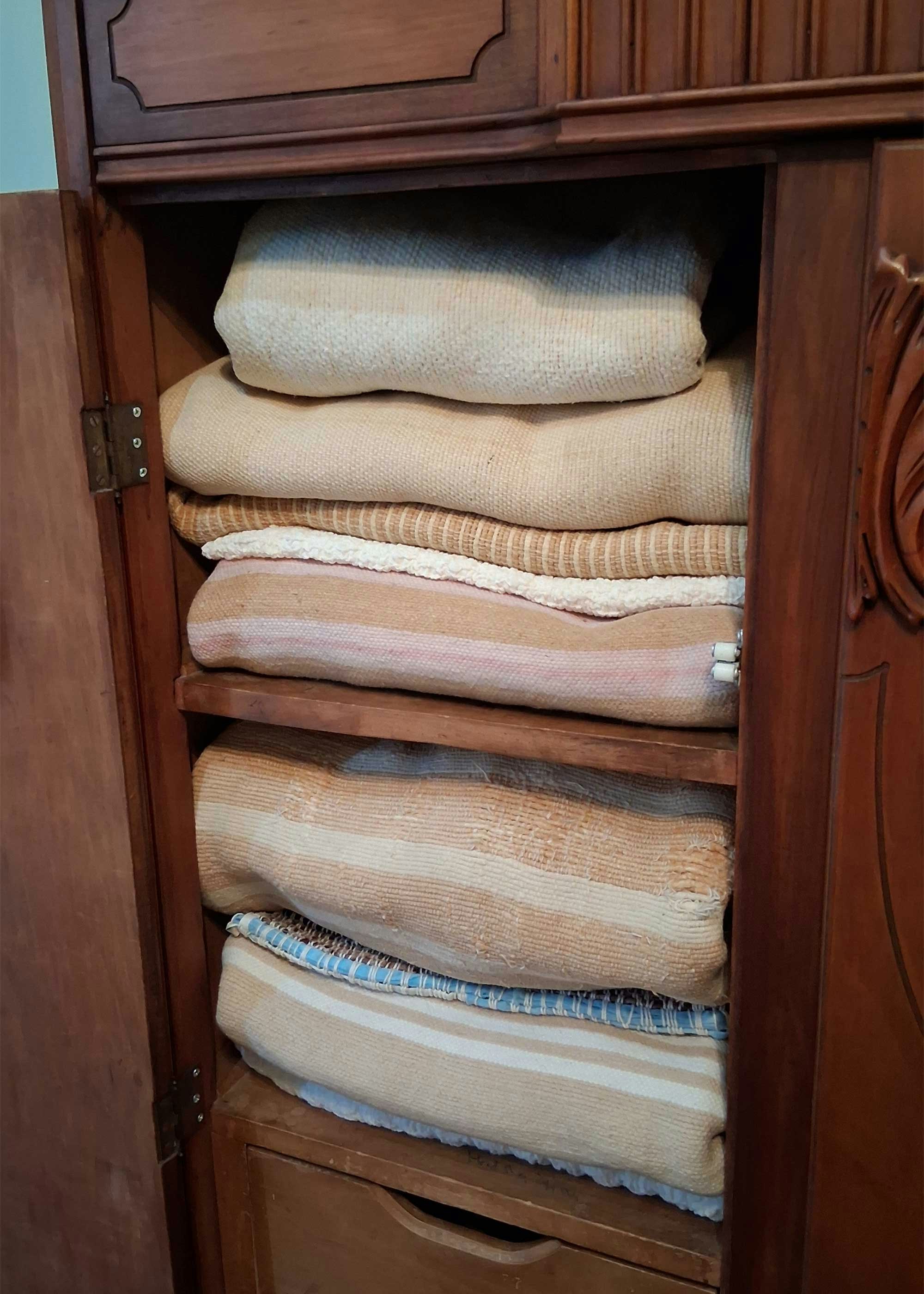
I’ve had the rare honor of sleeping under these historic blankets in a guest bed, and I slept deeply. The color alone is unforgettable: warm brown and tan tones, often striped with white cotton, indigo-dyed blue, or colorful rag strips. They are textiles made with the expectation that they would last, be used and mended, and passed along to the next generation. That same ethic of care extends beyond the cloth itself, reminding us that the land which grows our fibers also needs patience, repair, and long-term stewardship.
 The guest bed Aleatha slept in, complete with mulitple antique Acadian brown cotton blankets.
Lessons for the Future
Today, Acadian Brown Cotton is inspiring us to create a regional textile economy grounded in that mindset. Its life begins in healthy Acadian soil, with farmers practicing regenerative methods that build soil fertility rather than deplete it. From seed to plant, from fiber to yarn, from garment to eventual biodegradation, the cotton completes a full circle.
Louisiana currently grows thousands of acres of cotton using conventional agricultural methods, yet there are not enough gins or mills to process it all, and most of it ends up being shipped overseas. Our hope is to change that. By purchasing Acadian Brown Cotton for a fair price, we support farmers who use regenerative methods. Soon, we hope to build a fiber mill, so we can process Acadian Brown Cotton locally. The goal is to eventually expand the mill’s capacity to other Louisiana-grown fibers such as Gulf Coast wool, mohair, angora, white cotton, hemp, and roselle hibiscus to support both the land and local livelihoods.
 Ginned Acadian brown cotton.
Spinning Acadian Brown Cotton has shown me how closely yarn can be tied to place and time. Even though I’m not from Acadiana, I feel deeply connected to it when I spin this fiber. Each seed has genetic ties to the work of earlier hands, connecting those hands with mine. As modern spinners, when we work with region-specific, heritage fibers, we are drawn into a legacy that continues to grow and take shape, one that depends as much on the land as on the hands that spin. Like it has for hundreds of years, Coton jaune flourishes when planted in Acadian soil, blessing us in return with warmth, beauty, and prosperity.
Further Reading
Subscribers can log in or click on the image below to access Tom Knisely’s Cajun-Inspired Cotton Dish Towels pattern.
 Tom Knisely’s Cajun-Inspired Cotton Dish Towels. Photo by Joe Coca.
SUBSCRIBER EXCLUSIVE
I moved to Louisiana eight years ago, but it wasn’t until the pandemic in 2020 that I truly began to feel rooted here. Like many people, I focused on my home during lockdown and got into gardening and raising chickens. As a lifelong creative, I was also searching for a new interest, something soothing and tactile. Then I discovered handspinning. After only twenty minutes with a drop spindle and a YouTube video, I was hooked.
As restrictions eased, I began looking for a local spinning guild or fiber community. I joined a nearby knitting group, where a few spinners welcomed me warmly, but all of the nearest guilds were hours away. I kept spinning anyway and kept searching.
That search led me, unexpectedly, to Acadian Brown Cotton.
Cajun or Acadian?
Acadie was located in the area of Eastern Canada in what are now known as the Maritime provinces, and colonists who lived there developed a distinct culture from other French colonies. The colony was eventually controlled by Great Britain, but many Acadians refused to swear allegiance to Britain. They were deported forcefully from this area by the British from 1755–1764 in what is called the Great Expulsion, or Le Grand Dérangement. Many Acadians died as a result, but after a long and winding journey, some of them ended up in what is now Louisiana. They formed the basis of what we now know as Cajun culture. (See Further Reading.)
What is Acadian Brown Cotton?
Also known as Coton jaune—yellow cotton—Acadian Brown Cotton is an heirloom variety cultivated in the Acadiana region of Louisiana for more than 200 years. Early Acadian families carefully selected and saved seed, growing cotton that thrived in local conditions and spinning it into yarn for household textiles, most notably the striped blankets that have become emblematic of Acadian material culture. Growing and weaving with this cotton remains an unbroken Acadian tradition to this day.
When I first encountered Acadian Brown Cotton on Facebook, I was immediately drawn in. As a history lover and small-scale homesteader, I was captivated by the idea of a fiber crop so deeply tied to place, memory, and women’s work, right here in Louisiana. The challenge was distance: I lived more than three hours from Acadiana. Still, the pretty brown cotton lingered in my thoughts.
Acadiana Fibershed
After starting my own fiber art business, I reached out to the Acadiana Fibershed and was introduced to Sharon Donnan, founder of the Acadian Brown Cotton nonprofit. Sharon is a textile historian and documentary film producer, and the catalyst behind the modern revival of this heritage cotton. Since 2017, her work, alongside a dedicated team of farmers and volunteers, has focused on preserving heirloom seed, supporting small-scale growers and artisans, and rebuilding a regional fiber system rooted in regenerative agriculture.
Through these efforts, Acadian brown cotton seed was banked and shared, more farmers began planting the crop, and the cotton was once again ginned and milled into roving and yarn. When that fiber became available to spinners and weavers, it sold out quickly—a clear signal that this centuries-old textile tradition still resonated.
I soon became involved as a volunteer. Despite the distance, I began traveling to spin Acadian Brown Cotton for educational demonstrations, learning firsthand what makes this heritage fiber both challenging and rewarding.
Freshly picked Acadian brown cotton. Photo courtesy Acadian Brown Cotton nonprofit.
Spinning Acadian Brown Cotton
Acadian Brown Cotton has an exceptionally short staple length. This short staple length requires a longdraw technique to spin successfully. My yarn is still uneven—thick in places, thin in others. I hope to improve this, but I don’t see it as a flaw. When you study antique Acadian blankets, the brown cotton weft yarn is often inconsistent. Those textiles were made by women who grew the cotton themselves, ginned it by hand, spun thick, sturdy singles, and wove them with strong warps. The soft, thick, and weighty blankets that resulted are practical, beautiful, and enduring.
The author spinning Acadian brown cotton with a supported longdraw technique on a Louët S77. With a little bit of patience, you can learn to spin cotton on just about any wheel.
I’ve had the rare honor of sleeping under these historic blankets in a guest bed, and I slept deeply. The color alone is unforgettable: warm brown and tan tones, often striped with white cotton, indigo-dyed blue, or colorful rag strips. They are textiles made with the expectation that they would last, be used and mended, and passed along to the next generation. That same ethic of care extends beyond the cloth itself, reminding us that the land which grows our fibers also needs patience, repair, and long-term stewardship.
The guest bed Aleatha slept in, complete with mulitple antique Acadian brown cotton blankets.
Lessons for the Future
Today, Acadian Brown Cotton is inspiring us to create a regional textile economy grounded in that mindset. Its life begins in healthy Acadian soil, with farmers practicing regenerative methods that build soil fertility rather than deplete it. From seed to plant, from fiber to yarn, from garment to eventual biodegradation, the cotton completes a full circle.
Louisiana currently grows thousands of acres of cotton using conventional agricultural methods, yet there are not enough gins or mills to process it all, and most of it ends up being shipped overseas. Our hope is to change that. By purchasing Acadian Brown Cotton for a fair price, we support farmers who use regenerative methods. Soon, we hope to build a fiber mill, so we can process Acadian Brown Cotton locally. The goal is to eventually expand the mill’s capacity to other Louisiana-grown fibers such as Gulf Coast wool, mohair, angora, white cotton, hemp, and roselle hibiscus to support both the land and local livelihoods.
Ginned Acadian brown cotton.
Spinning Acadian Brown Cotton has shown me how closely yarn can be tied to place and time. Even though I’m not from Acadiana, I feel deeply connected to it when I spin this fiber. Each seed has genetic ties to the work of earlier hands, connecting those hands with mine. As modern spinners, when we work with region-specific, heritage fibers, we are drawn into a legacy that continues to grow and take shape, one that depends as much on the land as on the hands that spin. Like it has for hundreds of years, Coton jaune flourishes when planted in Acadian soil, blessing us in return with warmth, beauty, and prosperity.
Further Reading
Subscribers can log in or click on the image below to access Tom Knisely’s Cajun-Inspired Cotton Dish Towels pattern.
Tom Knisely’s Cajun-Inspired Cotton Dish Towels. Photo by Joe Coca.
[PAYWALL]