Watch our newest free braid lesson, then see how the technique works with three different approaches.
Watch our newest free braid lesson, then see how the technique works with three different approaches. <a href="https://spinoffmagazine.com/blended-plies-an-unexpected-way-to-spin-a-braid/">Continue reading.</a>
In the fifth lesson of 5 Ways to Prep and Spin a Braid with Kate Larson, we’re exploring blended plies. (Are you new to the series? Start here.) This method might be very different from what you’ve seen before—I’ve tried lots of different ways to manipulate my braids, and it was definitely new to me! From blending just a little to thoroughly blending your braid, there are lots of ways to make this yarn, which we’ll explore in the second part of this post.
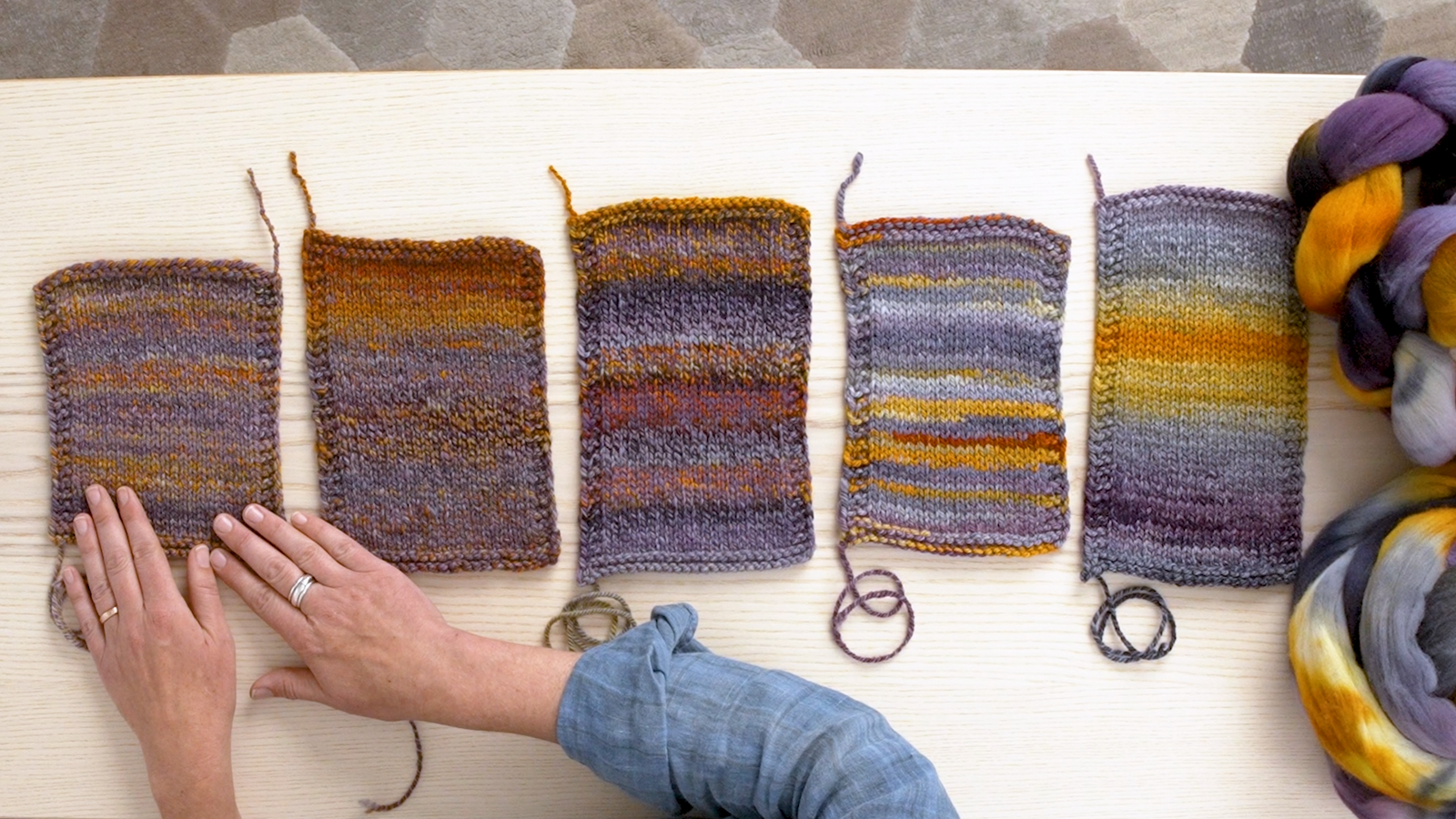
To start, check out this quick video, where Kate Larson walks us through how to blend one or more plies, and how different it looks in a knitted swatch.
What Comes Next? A Chance to Win
Of course, spinning yarn is just the beginning! What happens once the yarn is knitted, crocheted or woven? This is the real question I hope to answer with my samples, so the next time I sit down to spin, I can choose my approach with confidence.
We invite you to submit your samples for a chance to win!
If you completed one or more samples after watching this braid series, we want to see your results. Two ways you could win when you submit:
1. CONTEST: One lucky spinner will win a Spin Off All Access one-year subscription. Two runner-ups will receive an annual print magazine subscription of their choosing from Long Thread Media. Contest runs through June 30, 2026, so there's still time to join and spin your braid!
2. GET PUBLISHED: Several spinners will be selected to be featured in a future issue of Spin Off magazine. Everyone is eligible, and we can't wait to see your results.
HERE'S HOW >> Between now and June 30, 2026, finish your samples and fill out the form by clicking the button below or going to our entry form. We'll announce winners on July 1 on Spinoffmagazine.com! Good luck and happy spinning.
Blending Experiments
I was curious about some of the options Kate mentioned in this lesson, and decided to break my remaining fiber into three chunks to make some extra samples. Here are the results of my experiments, and what happened when I added a coordinating ply instead.
A Quick Blend
For my first sample,
SUBSCRIBER EXCLUSIVE
Unlock the Full Article with a Spin Off Subscription
Get instant access to this article and the entire Spin Off library of projects, inspiration, and expert instruction. With your subscription, you'll receive:
Master the art and science of spinning—from wheel mechanics to fiber prep
Learn from experienced spinners, dyers, and fiber artists in every issue
Explore in-depth tutorials, inspiring projects, and trusted techniques
Includes full access to print and digital issues of Spin Off Magazine
Spin Off explores the art and craft of making yarn. Each issue connects you to new and familiar voices in the handspinning community and is packed with information about fibers, tools, and traditions to inspire your creativity.
In the fifth lesson of 5 Ways to Prep and Spin a Braid with Kate Larson, we’re exploring blended plies. (Are you new to the series? Start here.) This method might be very different from what you’ve seen before—I’ve tried lots of different ways to manipulate my braids, and it was definitely new to me! From blending just a little to thoroughly blending your braid, there are lots of ways to make this yarn, which we’ll explore in the second part of this post.
To start, check out this quick video, where Kate Larson walks us through how to blend one or more plies, and how different it looks in a knitted swatch.
What Comes Next? A Chance to Win
Of course, spinning yarn is just the beginning! What happens once the yarn is knitted, crocheted or woven? This is the real question I hope to answer with my samples, so the next time I sit down to spin, I can choose my approach with confidence.
We invite you to submit your samples for a chance to win!
If you completed one or more samples after watching this braid series, we want to see your results. Two ways you could win when you submit:
1. CONTEST: One lucky spinner will win a Spin Off All Access one-year subscription. Two runner-ups will receive an annual print magazine subscription of their choosing from Long Thread Media. Contest runs through June 30, 2026, so there's still time to join and spin your braid!
2. GET PUBLISHED: Several spinners will be selected to be featured in a future issue of Spin Off magazine. Everyone is eligible, and we can't wait to see your results.
HERE'S HOW >> Between now and June 30, 2026, finish your samples and fill out the form by clicking the button below or going to our entry form. We'll announce winners on July 1 on Spinoffmagazine.com! Good luck and happy spinning.
Blending Experiments
I was curious about some of the options Kate mentioned in this lesson, and decided to break my remaining fiber into three chunks to make some extra samples. Here are the results of my experiments, and what happened when I added a coordinating ply instead.
A Quick Blend
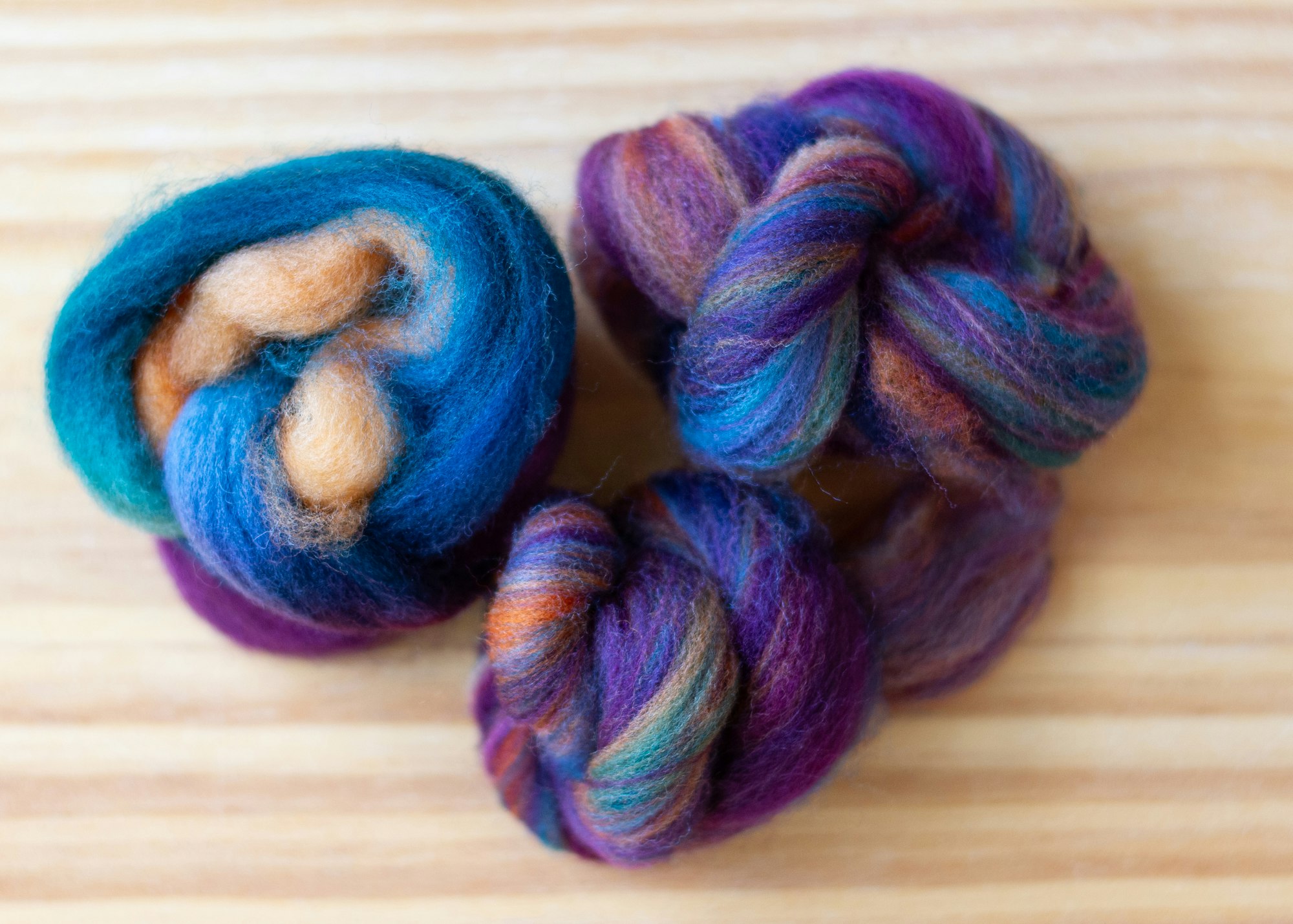
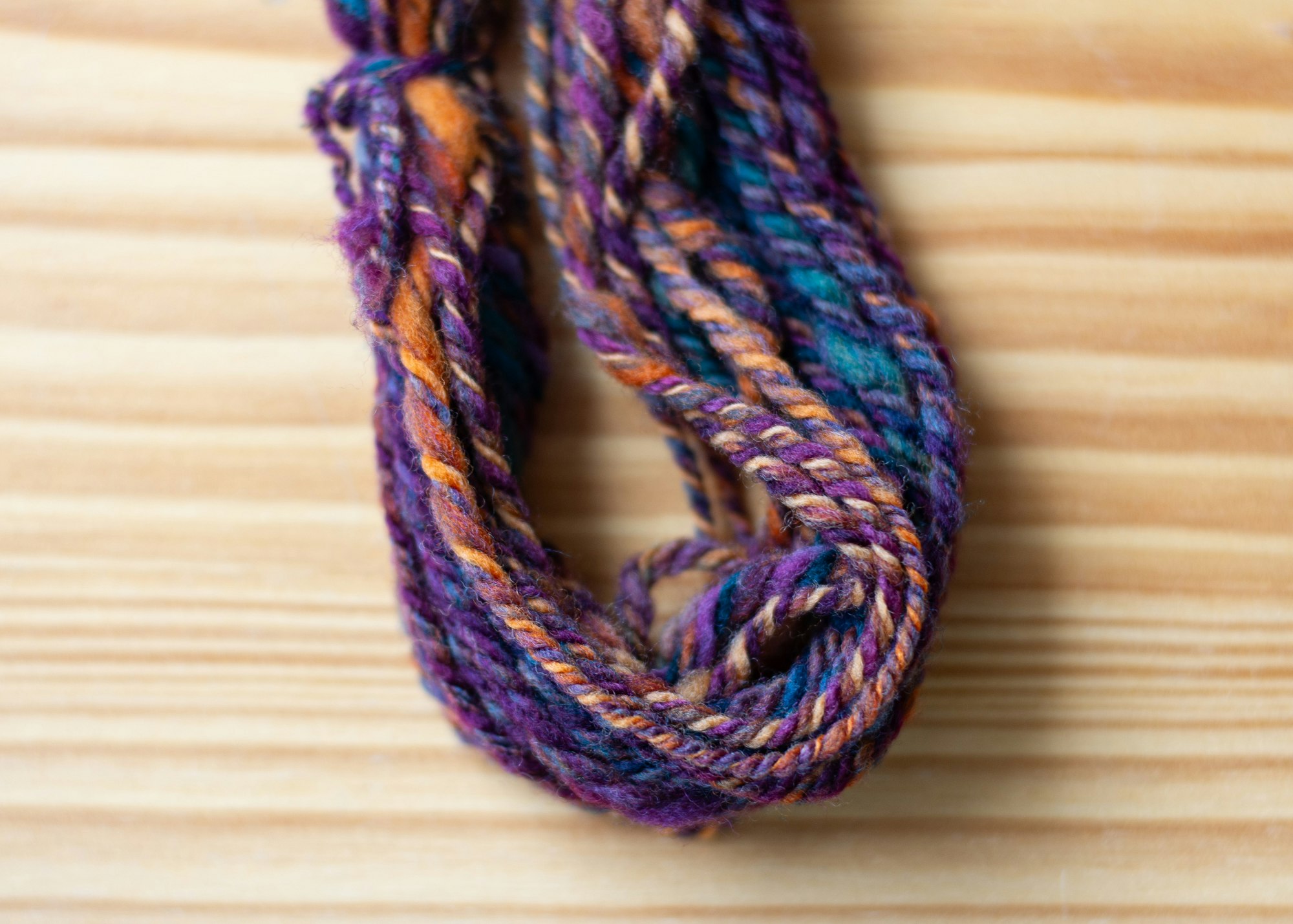
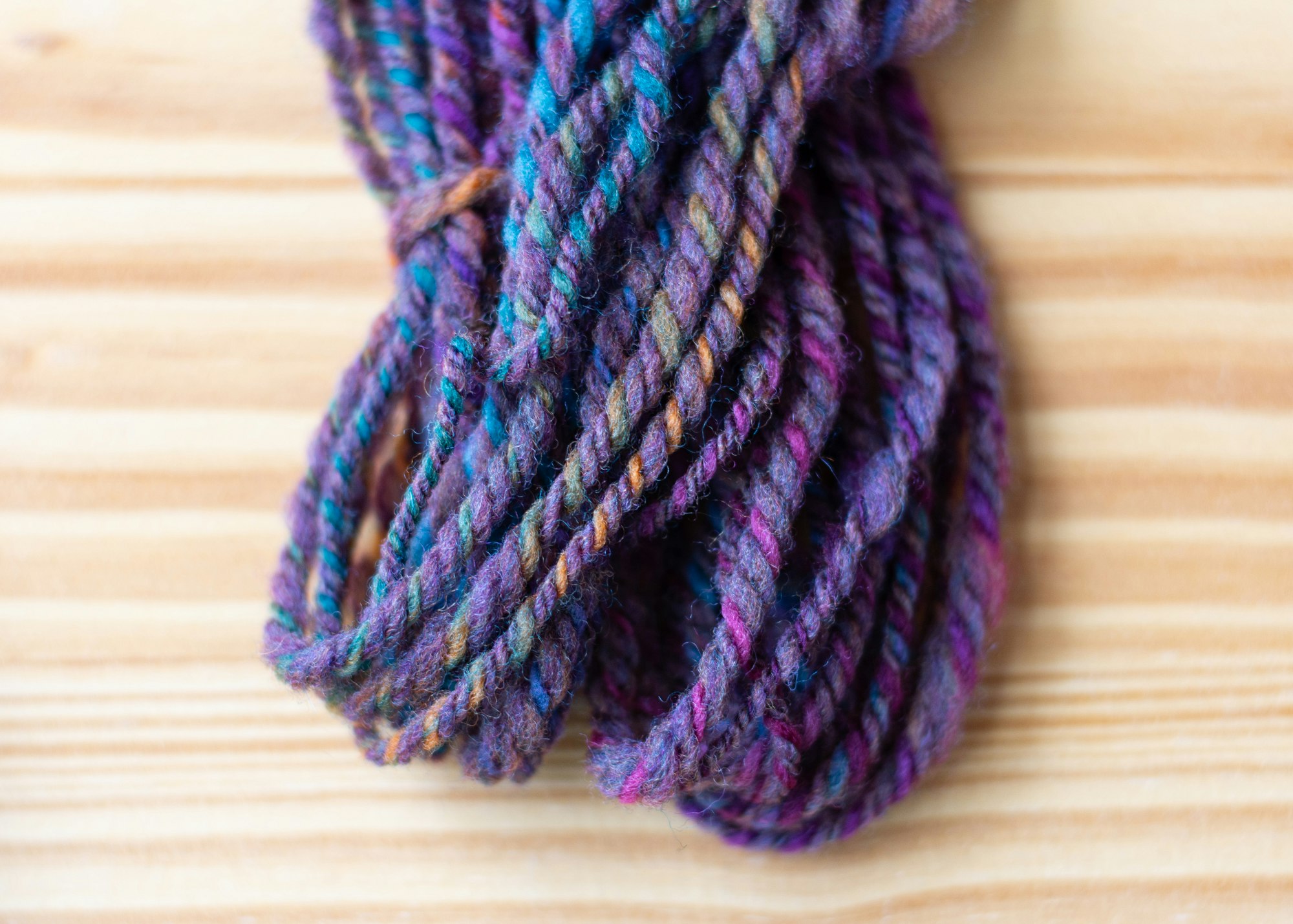
For my first sample,[PAYWALL] I blended the fiber for two of my singles just like Kate did in the lesson—just a swipe or two on the handcards. The third single stayed as it came in the braid. The resulting yarn is muted, but it seems to glow from within!
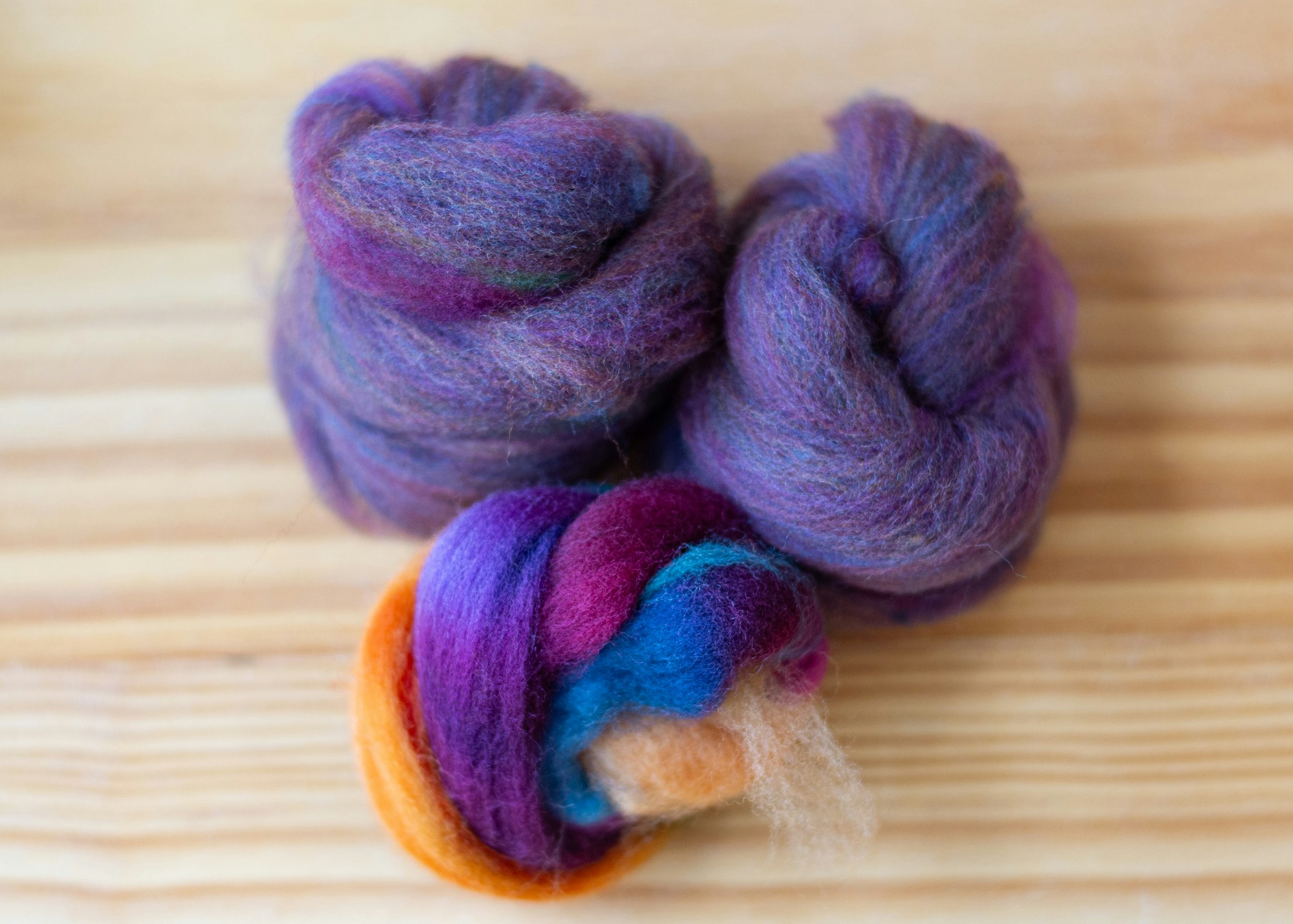
In the course, Kate mentions that more blending leads to more desaturation. In theory, this makes sense, but I wanted to see how it impacted the final yarn. For this sample, I thoroughly blended the fiber for two of the plies. The color shifted from a sparkling blend to a dark, dull violet—one of my favorite colors. The final yarn still has a significant amount of color variation due to the one unblended ply, but gone is that sense of an inner glow that I saw in the first sample.
Is that a fail? Not necessarily! I’m still interested in how the swatches knit up. Since I tend to prefer a more heathered yarn and less marling, I suspect that I’ll love this sample once it’s knitted.
Kate discusses how the blending process can help you move towards a color that you find more wearable. You can emphasize the colors you like, and minimize the ones you don’t find appealing. For my third sample I chose to keep one ply as it came from the braid and one slightly blended ply, as in the first sample. But what would happen if I added a coordinating color from elsewhere?
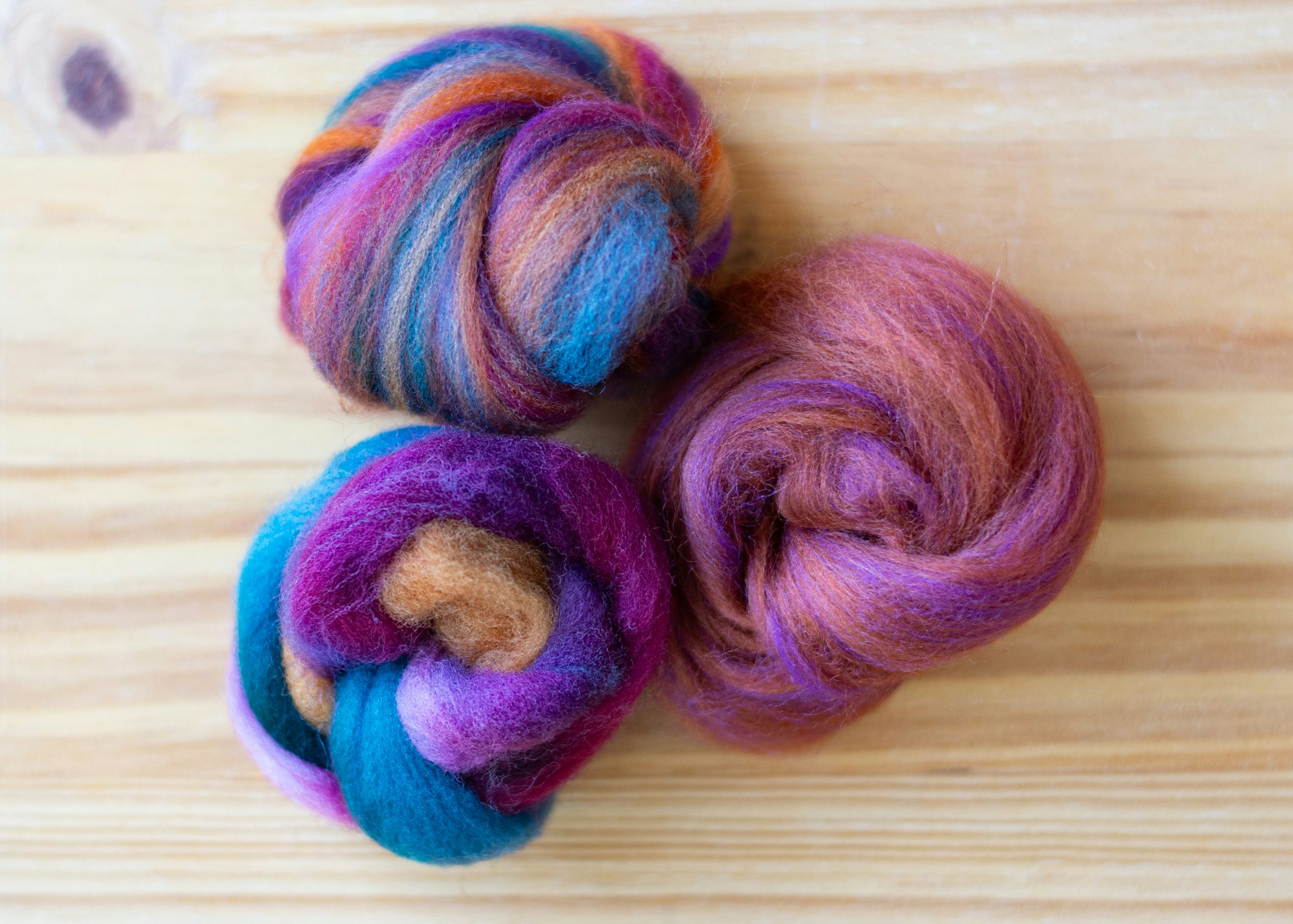
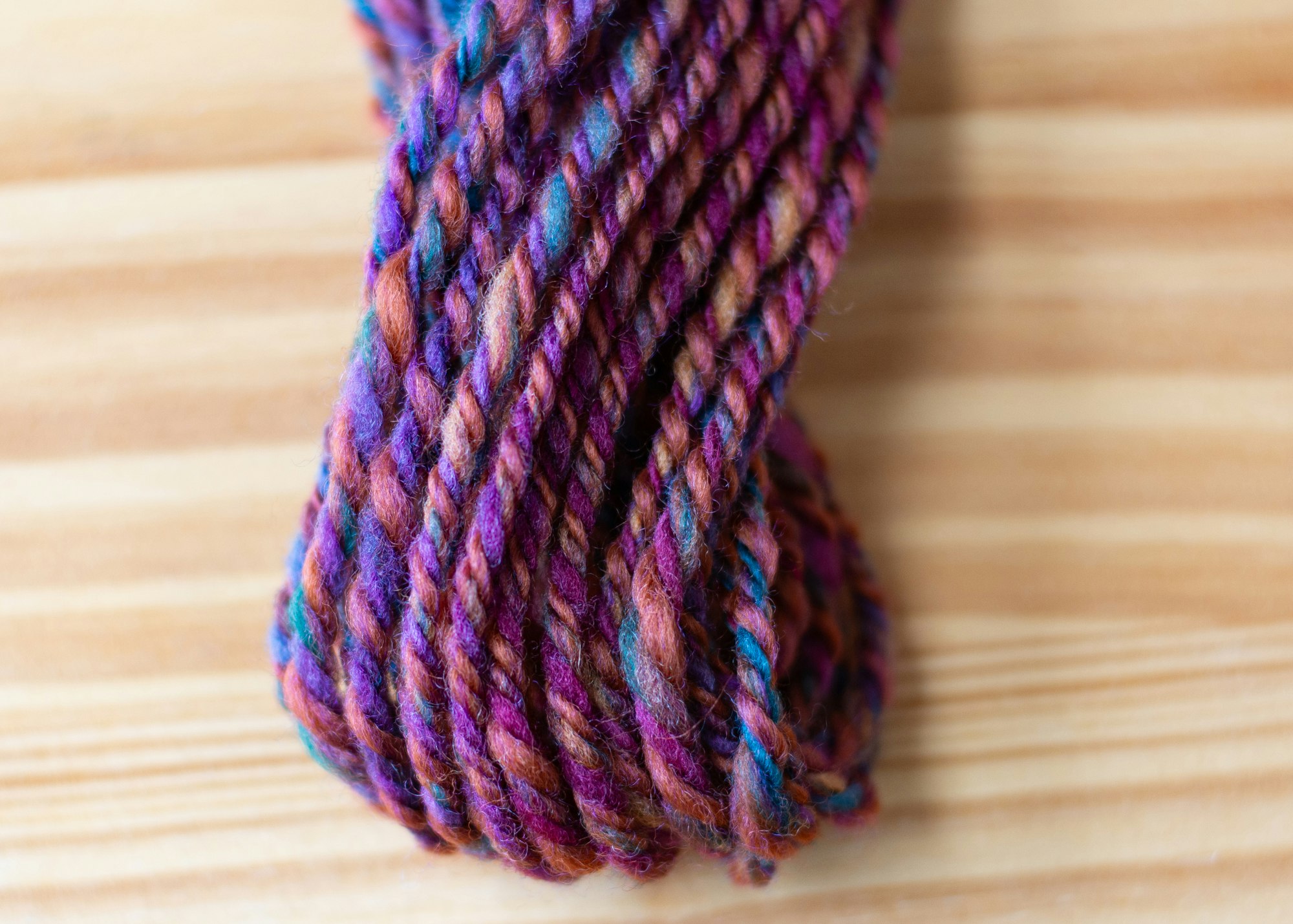
For the final ply, I went diving into my stash to find coordinating colors that would play up the golden tone. I blended a coppery brown with a bright violet. The result was a color I can only describe as “plummy”—not exactly the color of plums, but in the neighborhood.
The final yarn was stunning! The colors shift significantly, thanks to the one unblended ply. The blended ply from the original braid ties everything together, and the coordinating ply changes the overall color of the yarn to a warm reddish-orange color.
This last technique is one I want to explore more. It would be a great way to make a precious braid stretch over more yardage—a concept that we explore in depth in the recent Summer 2026 Spin Off!