Join us as we explore five ways to prep and spin a braid, and how to pair handspinning techniques with these beautiful, dyed fibers.
Join us as we explore five ways to prep and spin a braid, and how to pair handspinning techniques with these beautiful, dyed fibers. <a href="https://spinoffmagazine.com/how-do-you-spin-a-braid-try-a-shuffled-palette/">Continue reading.</a>
In our first lesson of 5 Ways to Prep and Spin a Braid with Kate Larson, we learned how to split up a braid for maximum sampling fun, how to spin off the tips of a braid to preserve the color sequence, and how to chain-ply. All those skills combined to create a chain-plied yarn that’s a mini snapshot of what our selected braid will look like when it’s spun with no color manipulation.
That’s a great start, but many of us wonder what would happen if we tried something just a little bit different. Even the most beautifully dyed braid has a few surprises, if you just take the time to make a few samples!
In this month’s installment of 5 Ways to Prep and Spin a Braid, we’re looking at a shuffled palette. What does this mean? Well, it means that while the dyer has chosen the colors, you get to choose the sequence—with as much or as little precision as you’d like.
How to Do the Shuffle
If you like color blocks with bold transitions for a self-striping yarn, you can do that. Or, create a gradient, where each color flows into the next. Or, as Kate shows in the video, you can literally shuffle the colors around to create a more variegated yarn where you can see new color interactions in your braid.
To shuffle your colors, simply break apart your fiber into smaller sections, then shuffle the colors in your hand like a deck of cards.
Once again, we’ll be chain-plying our singles—for quick reference, take a look at Lesson One for Kate’s tips for easy chain-plying.
Want to see how it will look with different colorways? Read on to see the technique demonstrated with more options!
More Ways to Shuffle Your Palette
Kate’s sample is gorgeous, but it’s often hard to visualize how your sample will look until you’ve seen the process repeated a few times. If you’re not quite ready to dive in, here are a few more examples of how you might go about dividing your braid.
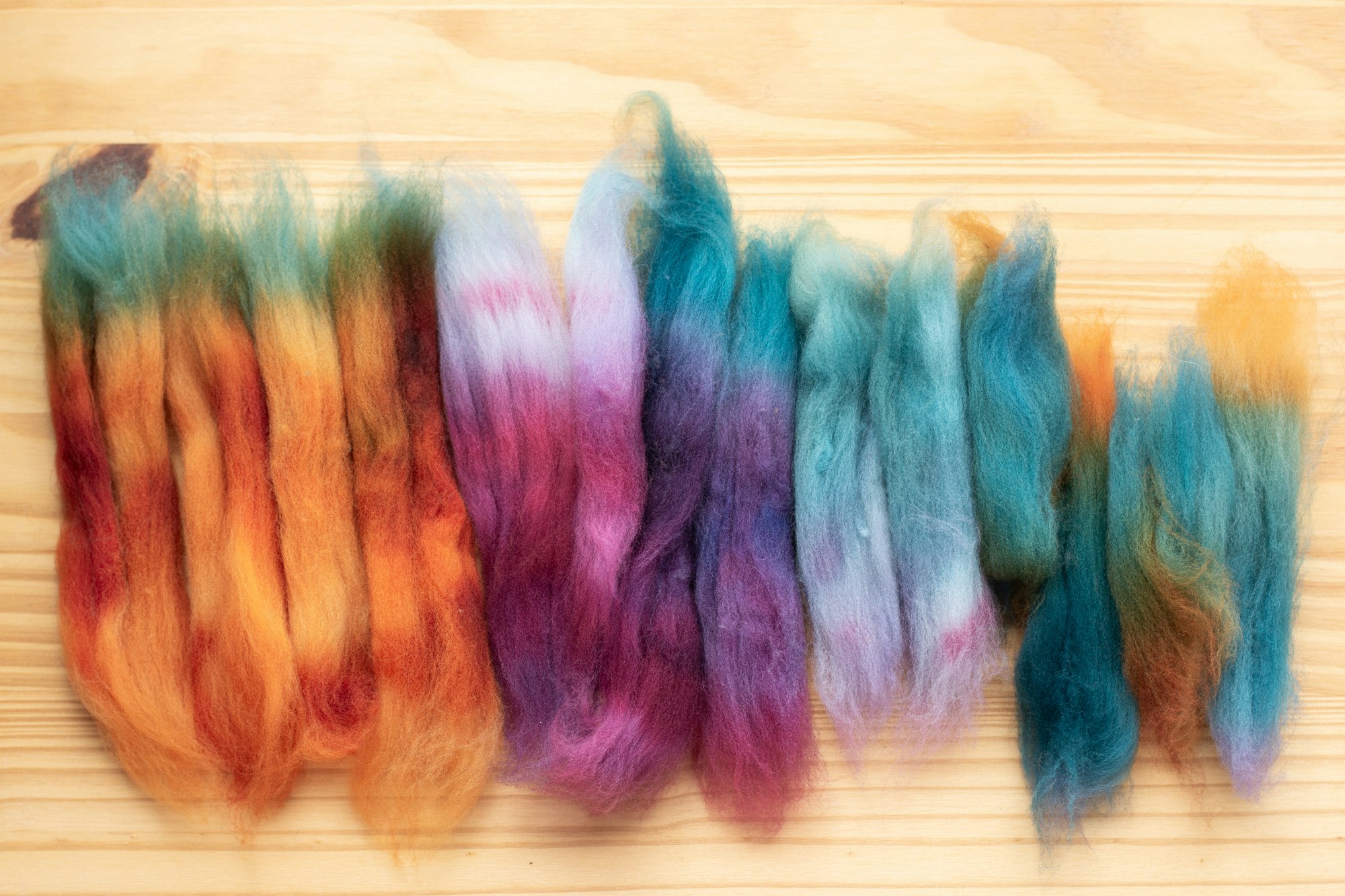
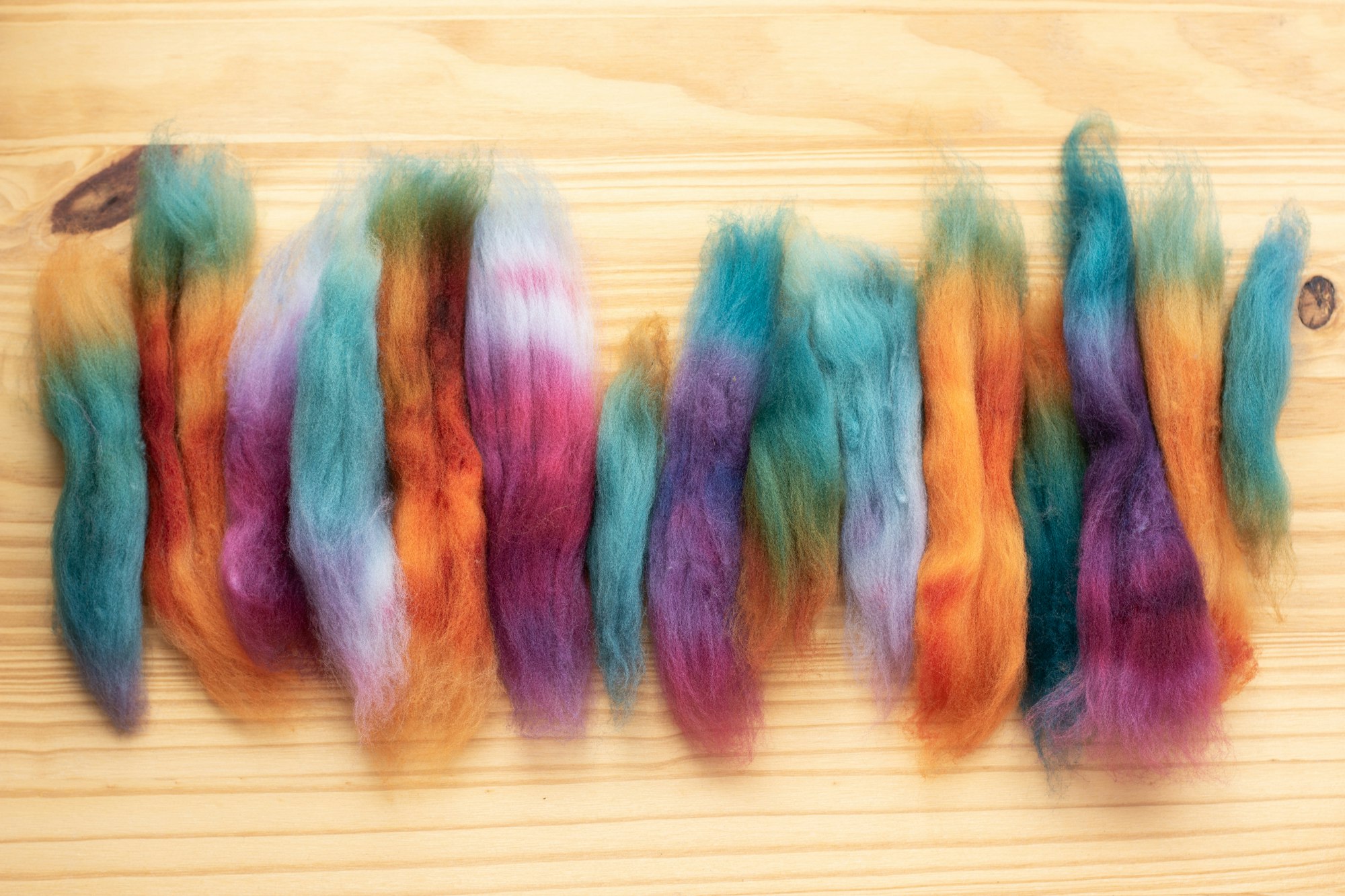
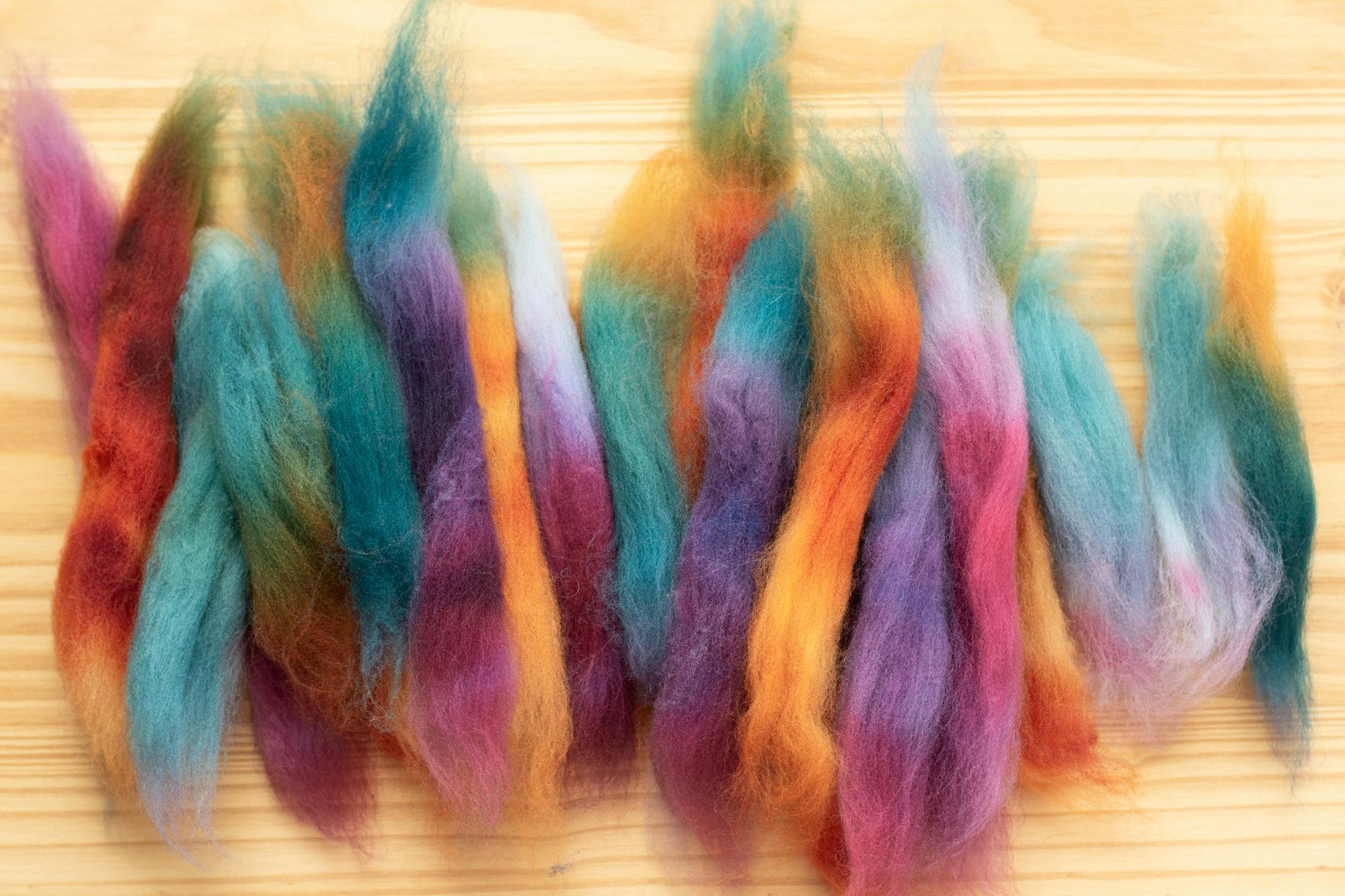
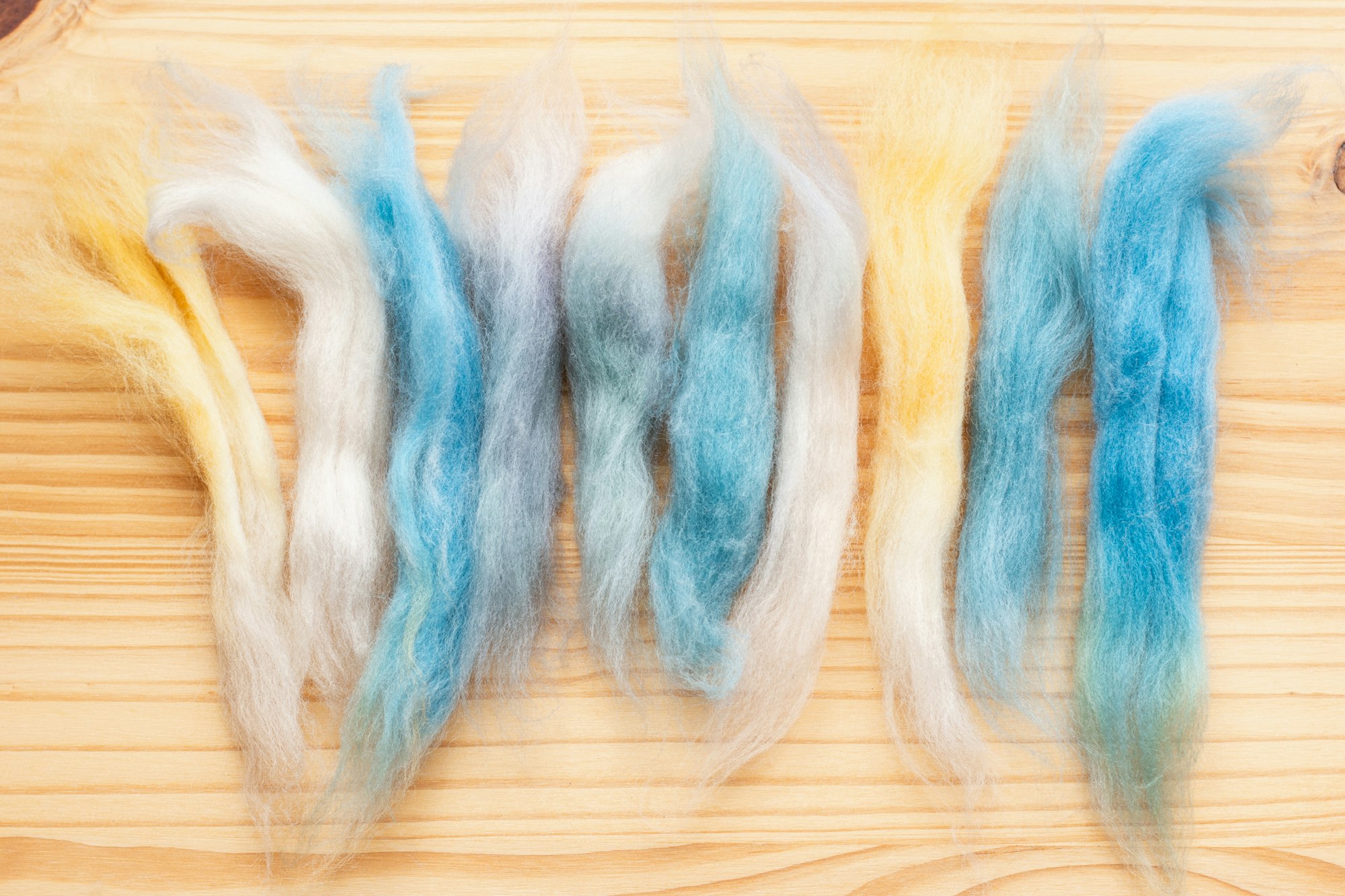
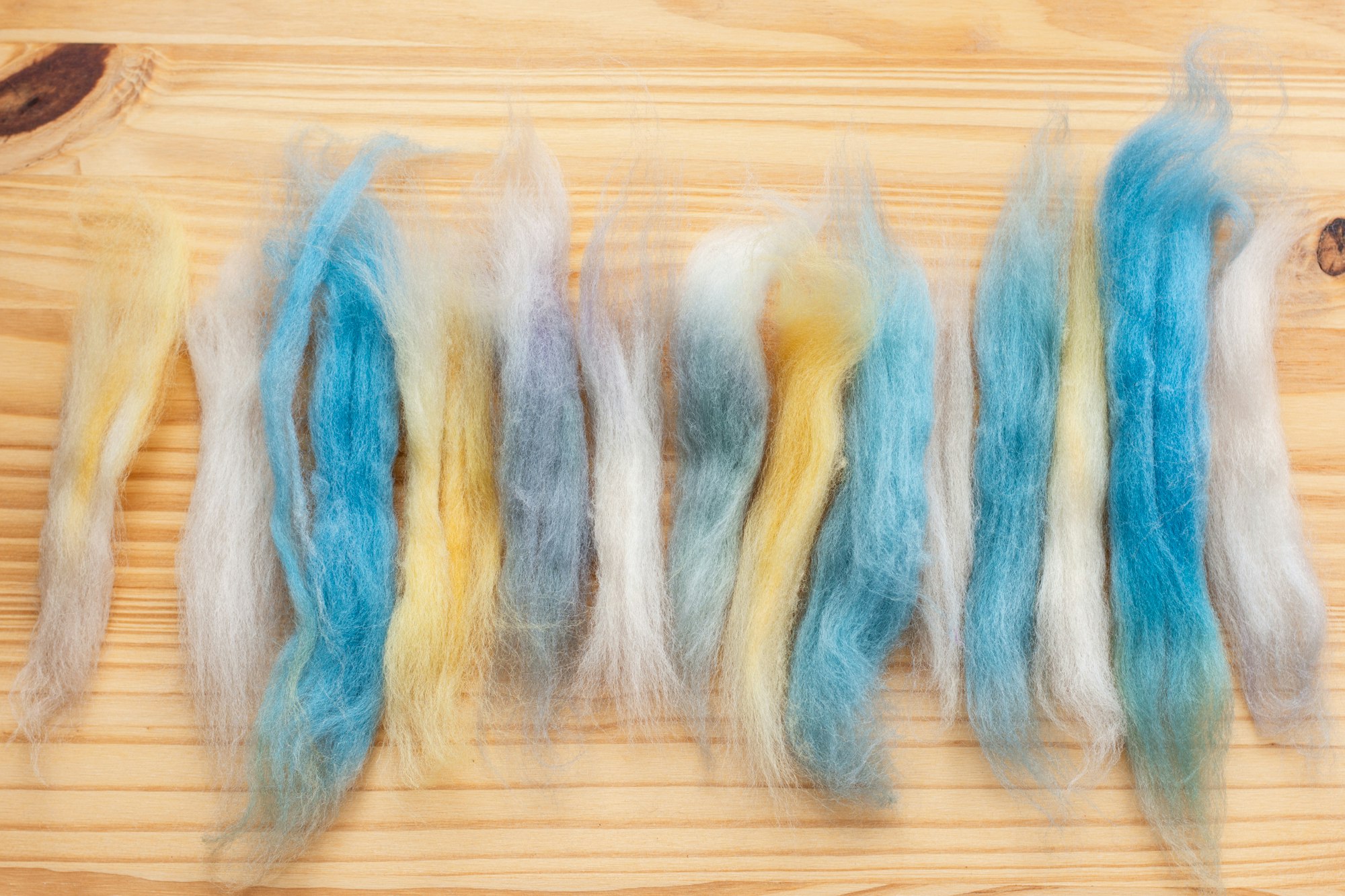
On the first braid, dyed by Honeygold Acres in the colorway Lake Park, we’ve created three options: a gradient, a shuffled palette that mixes the colors up a little bit, and a shuffled palette that mixes them up even more.
SUBSCRIBER EXCLUSIVE
Unlock the Full Article with a Spin Off Subscription
Get instant access to this article and the entire Spin Off library of projects, inspiration, and expert instruction. With your subscription, you'll receive:
Master the art and science of spinning—from wheel mechanics to fiber prep
Learn from experienced spinners, dyers, and fiber artists in every issue
Explore in-depth tutorials, inspiring projects, and trusted techniques
Includes full access to print and digital issues of Spin Off Magazine
Spin Off explores the art and craft of making yarn. Each issue connects you to new and familiar voices in the handspinning community and is packed with information about fibers, tools, and traditions to inspire your creativity.
In our first lesson of 5 Ways to Prep and Spin a Braid with Kate Larson, we learned how to split up a braid for maximum sampling fun, how to spin off the tips of a braid to preserve the color sequence, and how to chain-ply. All those skills combined to create a chain-plied yarn that’s a mini snapshot of what our selected braid will look like when it’s spun with no color manipulation.
That’s a great start, but many of us wonder what would happen if we tried something just a little bit different. Even the most beautifully dyed braid has a few surprises, if you just take the time to make a few samples!
In this month’s installment of 5 Ways to Prep and Spin a Braid, we’re looking at a shuffled palette. What does this mean? Well, it means that while the dyer has chosen the colors, you get to choose the sequence—with as much or as little precision as you’d like.
How to Do the Shuffle
If you like color blocks with bold transitions for a self-striping yarn, you can do that. Or, create a gradient, where each color flows into the next. Or, as Kate shows in the video, you can literally shuffle the colors around to create a more variegated yarn where you can see new color interactions in your braid.
To shuffle your colors, simply break apart your fiber into smaller sections, then shuffle the colors in your hand like a deck of cards.
Once again, we’ll be chain-plying our singles—for quick reference, take a look at Lesson One for Kate’s tips for easy chain-plying.
Want to see how it will look with different colorways? Read on to see the technique demonstrated with more options!
More Ways to Shuffle Your Palette
Kate’s sample is gorgeous, but it’s often hard to visualize how your sample will look until you’ve seen the process repeated a few times. If you’re not quite ready to dive in, here are a few more examples of how you might go about dividing your braid.
On the first braid, dyed by Honeygold Acres in the colorway Lake Park, we’ve created three options: a gradient, a shuffled palette that mixes the colors up a little bit, and a shuffled palette that mixes them up even more. [PAYWALL]
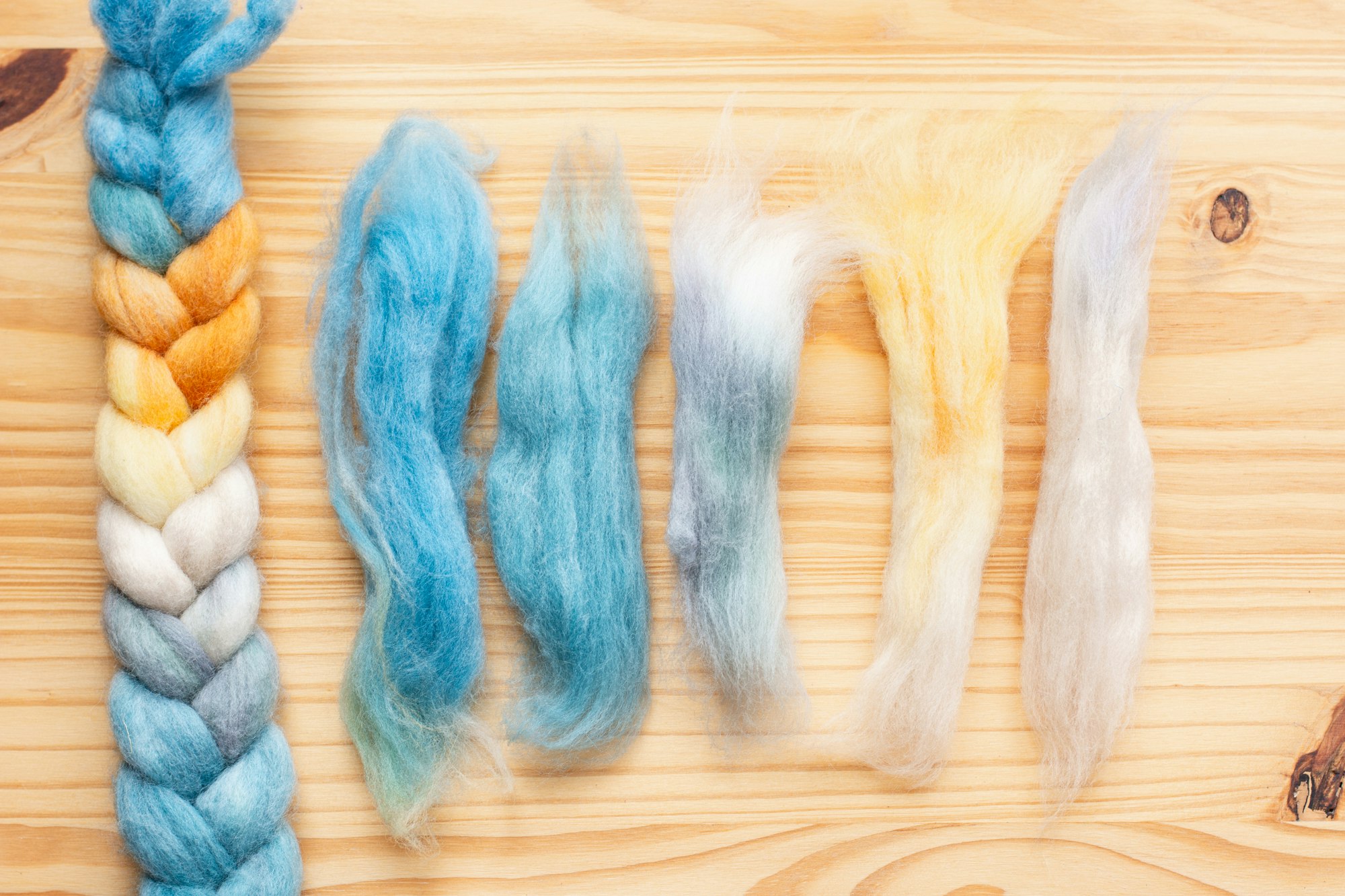
We repeated the exercise on another braid, this time pulling out the darker orange from the braid and focusing on the yellow, beige, greens, and blues in the braid. There’s no rule that says you have to keep all the colors if you don’t like one of them! In this instance, we also have a gradient, a shuffled palette that mixes the colors up a little bit, and a shuffled palette that mixes them up even more.
Once you’ve spun your samples, don’t forget to make up a swatch so you can see how it looks as a fabric. Do you like the color interactions? Are there any surprises? Jot down your notes, and watch for your next video lesson, launching Friday, April 3!

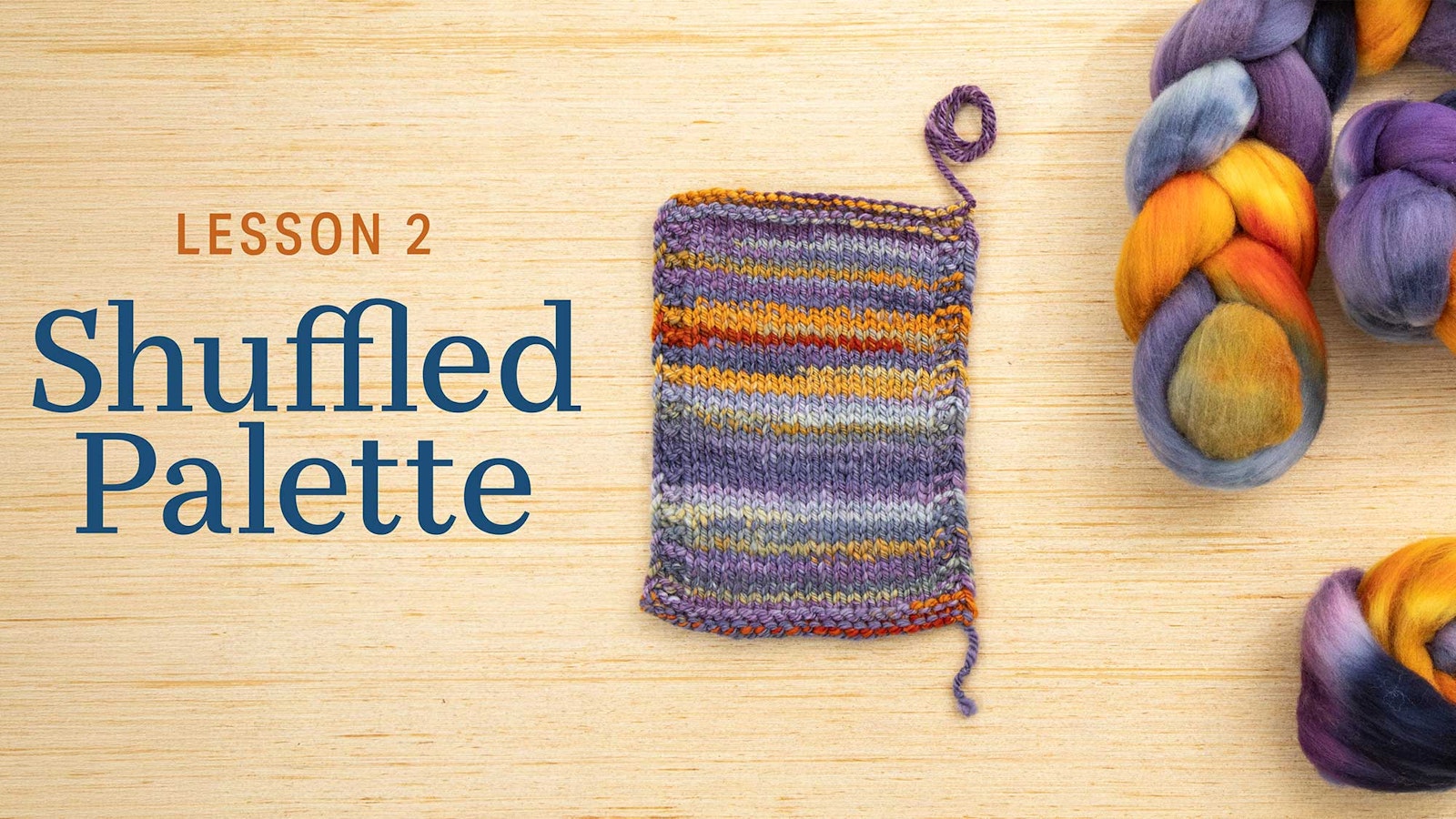
 To shuffle your colors, simply break apart your fiber into smaller sections, then shuffle the colors in your hand like a deck of cards.