
All Access
| Topic | Plying/Yarn Design |
|---|---|
| Fiber | Wool, Plant Fibers, Man-Made Fibers, Blends, Cotton, Linen/Flax |
| Author | Dodie Rush |
| Format | Article/Tutorial |
This requires an 'All Access Subscription' to view. Log in to access or subscribe today to unlock all of the premium content available.
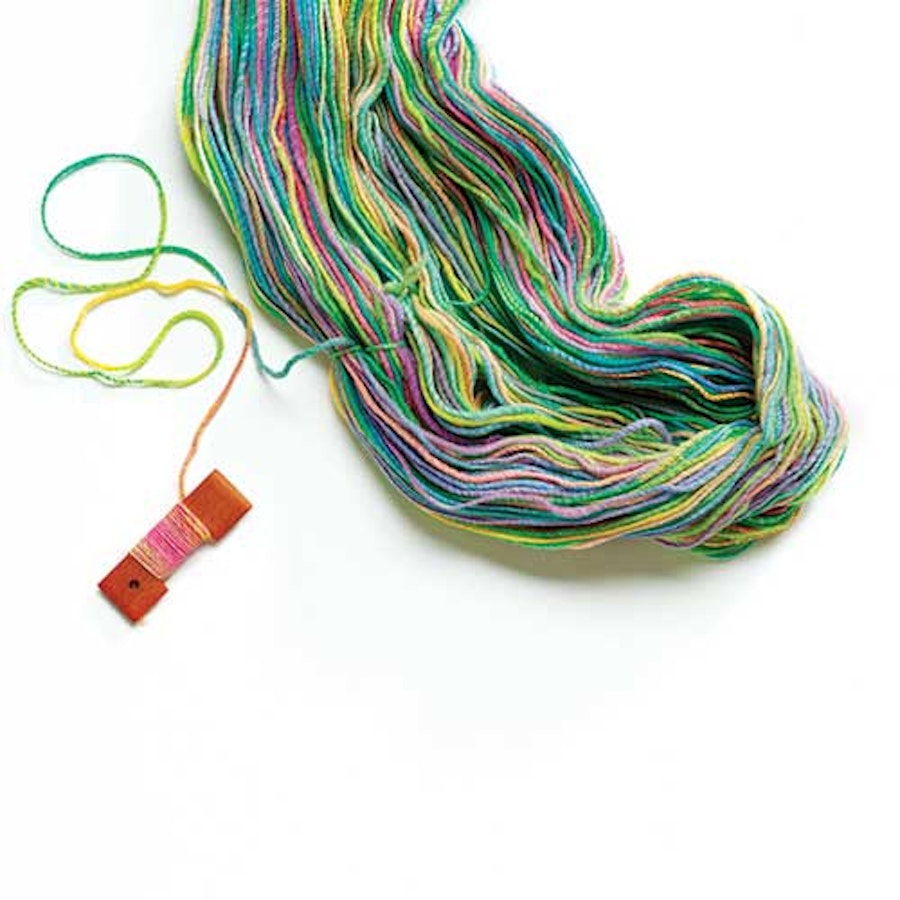
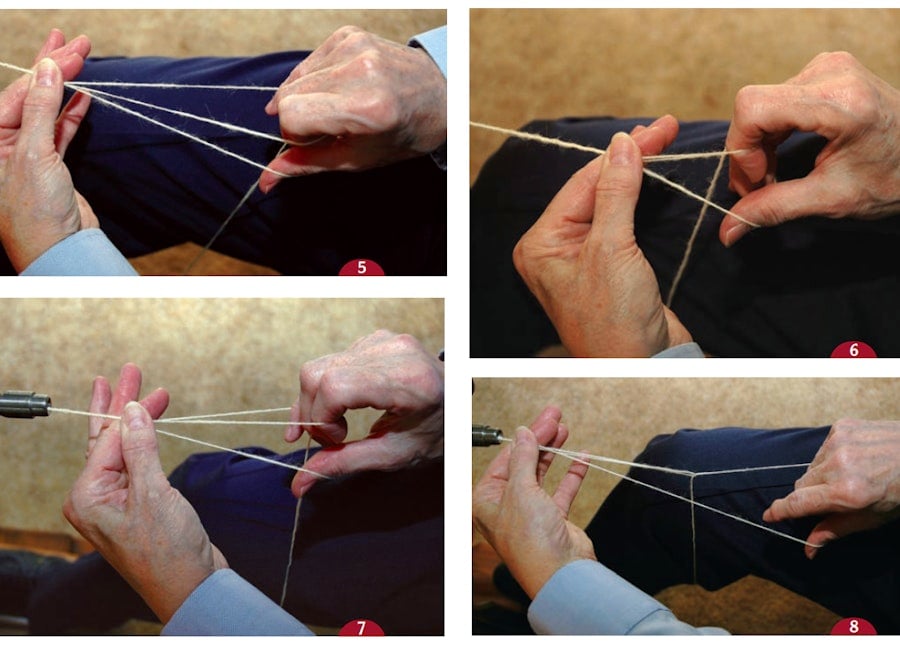
LoginCommonly known among spinners as “Navajo-plying,” plying chained singles produces a three-ply yarn from a bobbin of singles yarn and is accomplished by “chaining” loops; each new loop is drawn through the previous loop. With this technique, you can create three-ply yarn from one bobbin of singles instead of three.
You may be familiar with chaining a warp for weaving, creating a crochet chain, or making a chain stitch in embroidery, but you can’t make a stable yarn just chaining a strand of spun singles. The chained singles need sufficient twist in the opposite direction to balance the twist of the singles.
In her article “Plying Chained Singles,” Dodie Rush dives into some of the more technical aspects of chain-plying, like how much twist to add in chain-plying, as well as how it affects your color repeats. Step-by-step pictures of the process make this an article worth returning to time and again.
All items in the library are intended for personal use. Please do not distribute without written approval.