Humbugs, Barber Poles, and Marls: Understanding How Color Blends in Your Yarn
Watch our newest braid lesson, then untangle some terms and techniques for blending color in your handspun yarn.
Watch our newest braid lesson, then untangle some terms and techniques for blending color in your handspun yarn. <a href="https://spinoffmagazine.com/marls-and-understanding-how-color-blends-in-your-yarn/">Continue reading.</a>
In the fourth lesson of 5 Ways to Prep and Spin a Braid with Kate Larson, we’re exploring marls. (Are you new to the series? Start here.) There are lots of ways to make marled yarn, which we’ll explore in the second part of this post.
To start, check out this quick video, where Kate Larson walks us through how to spin a marled singles.
Exclusive: Untangling Terms
You might hear the word humbug and think it’s too early for a certain holiday story (I do!) and you might also wonder what it has to do with the other odd words in the title of this post. Barber pole, humbug, and marl are all terms for yarn or fiber that has some kind of color blending. Once made into fabric, this yarn creates random bits of color. Lately, most spinners have settled on the word marl as an umbrella term, but the other words also have specific meanings. Here’s what we’re talking about when we discuss marled yarns and some of their relatives.
SUBSCRIBER EXCLUSIVE
Unlock the Full Article with a Spin Off Subscription
Get instant access to this article and the entire Spin Off library of projects, inspiration, and expert instruction. With your subscription, you'll receive:
Master the art and science of spinning—from wheel mechanics to fiber prep
Learn from experienced spinners, dyers, and fiber artists in every issue
Explore in-depth tutorials, inspiring projects, and trusted techniques
Includes full access to print and digital issues of Spin Off Magazine
Spin Off explores the art and craft of making yarn. Each issue connects you to new and familiar voices in the handspinning community and is packed with information about fibers, tools, and traditions to inspire your creativity.
In the fourth lesson of 5 Ways to Prep and Spin a Braid with Kate Larson, we’re exploring marls. (Are you new to the series? Start here.) There are lots of ways to make marled yarn, which we’ll explore in the second part of this post.
To start, check out this quick video, where Kate Larson walks us through how to spin a marled singles.
Exclusive: Untangling Terms
You might hear the word humbug and think it’s too early for a certain holiday story (I do!) and you might also wonder what it has to do with the other odd words in the title of this post. Barber pole, humbug, and marl are all terms for yarn or fiber that has some kind of color blending. Once made into fabric, this yarn creates random bits of color. Lately, most spinners have settled on the word marl as an umbrella term, but the other words also have specific meanings. Here’s what we’re talking about when we discuss marled yarns and some of their relatives. [PAYWALL]
Barber Pole Yarns
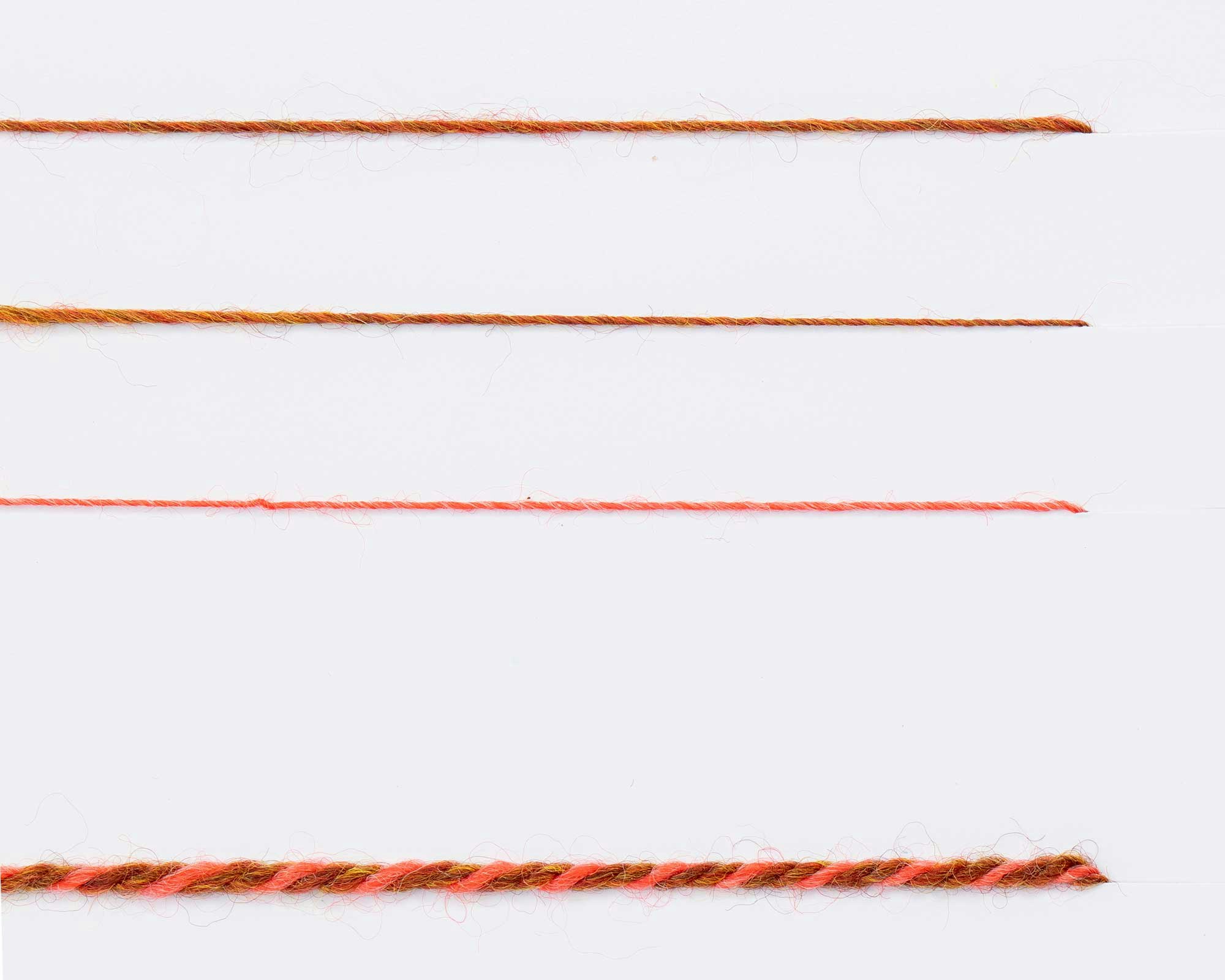
Barber pole is a broad word describing yarn that has contrasting colors in the plies. Combo spun yarns are a classic example. Barber pole yarns can also encompass yarns that have self-striping effects, such as fractal yarns or gradient yarns where the color changes don’t line up exactly, creating a speckling effect in the transition between colors.
Amanda Buckley developed this marled yarn and many more for her article, “Wearable Marls.” Note that this yarn could be described as a barberpole or marled yarn. Photos by Matt Graves
Humbug Fiber
Humbug is usually used to refer to spinning fiber that has two or more natural colors running the length of the top or roving. It’s not named after Ebeneezer Scrooge’s famous expression, but after a striped black-and-white hard candy. When spun, the dark and light fibers will create marled singles.
This North Ronaldsay fiber is presented as a humbug preparation, with both dark and light fibers in the same piece of roving. Photo by Pamela K. Schultz
Blended Top & Roving
Blended top or roving is similar to humbug fiber, in that more than one color runs the length of the top, but the fibers are often dyed. When spun, the colors blend. Depending on the color mix, the result may be subtle or intense.
Blended tops are created using solid-color dyed fibers that are blended in a machine known as a gill box, which combs the fibers to blend, straighten, and align them. They are usually processed—or gilled—more than once, and each pass makes the fiber smoother and more aligned but also results in the colors being less and less distinct from each other.
Many colors in blended top often create a subtle effect in the final yarn and swatch. Photo by Becks of Tiny Fibre Studio
As mentioned above, many spinners and knitters have settled on the word marl to describe the mottled effect created by these yarns and fibers. It’s a little word with lots of room for exploration!
Both of these yarns could be considered marled. On the left, each ply has a single color, and the color blending happens in the ply structure. On the right, each ply has marling in the singles, and the color mixing continues in the ply structure. Photo by Pamela K. Schultz
Tips for Making Marled Singles
In Lesson 4 of 5 Ways to Prep and Spin a Braid, Kate Larson shows how to create marled singles with space-dyed top or roving. This method increases color blending in each ply for a subtle effect in the finished yarn. The result is that you’ll often have at least two colors in your singles, and once you ply your yarn, the mix becomes even more nuanced. The first time I saw this effect, I thought the yarn was glowing from within!
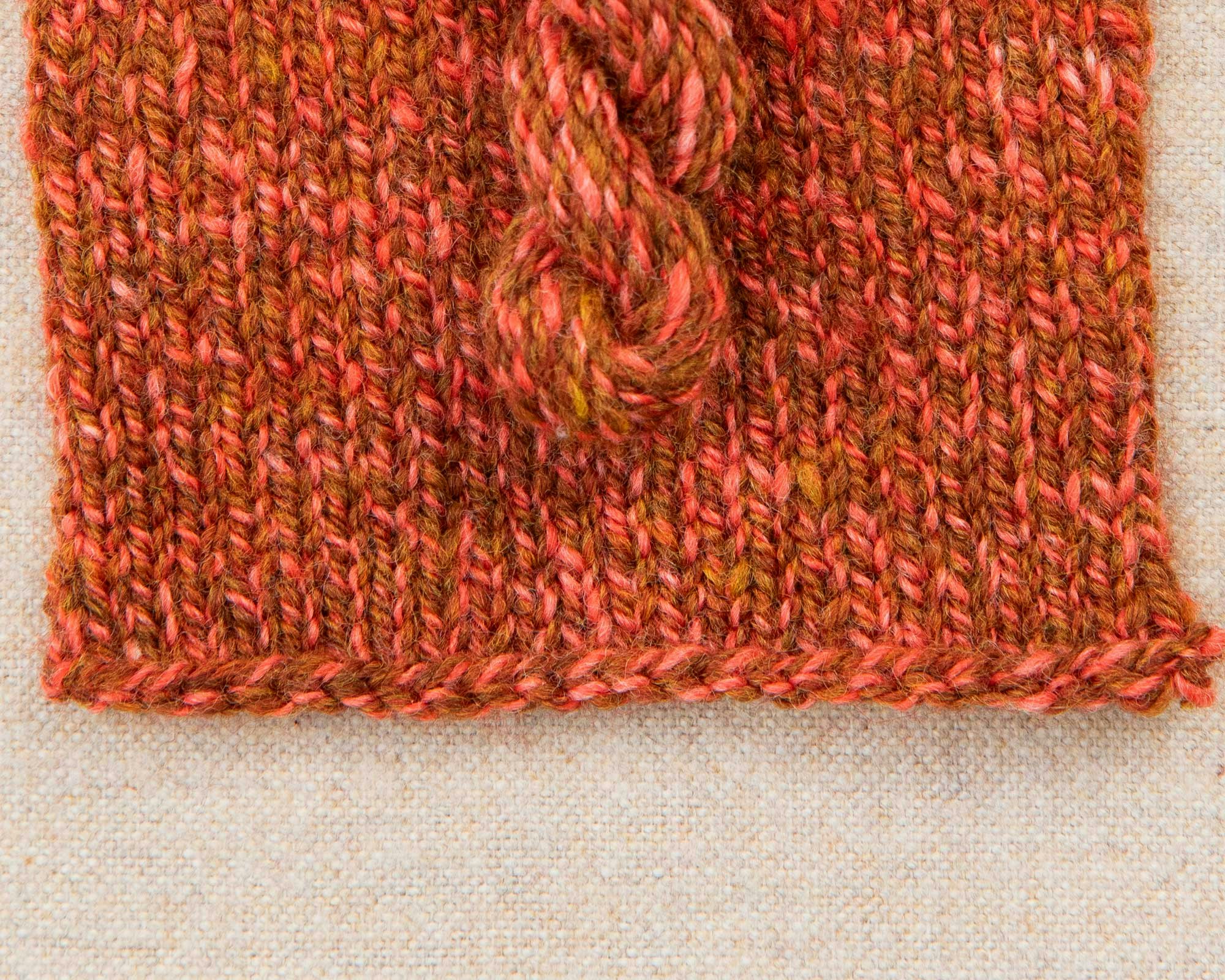
Notice how the plyback sample enhances the color blend.
The process for spinning marled singles is simple: strip the fiber for each ply into narrow strips—being careful to not make them too narrow—then flip one so that the colors no longer line up perfectly, and spin. This technique is sometimes called drafting the fiber together or combo drafting. It can be a little bit challenging, as the two strips of fiber are separate and seem to want to be spun separately from each other. In the video lesson, Kate offers several tips—you may want to predraft the fibers, and you can also hold the strips stacked one on top of the other, rather than side by side.
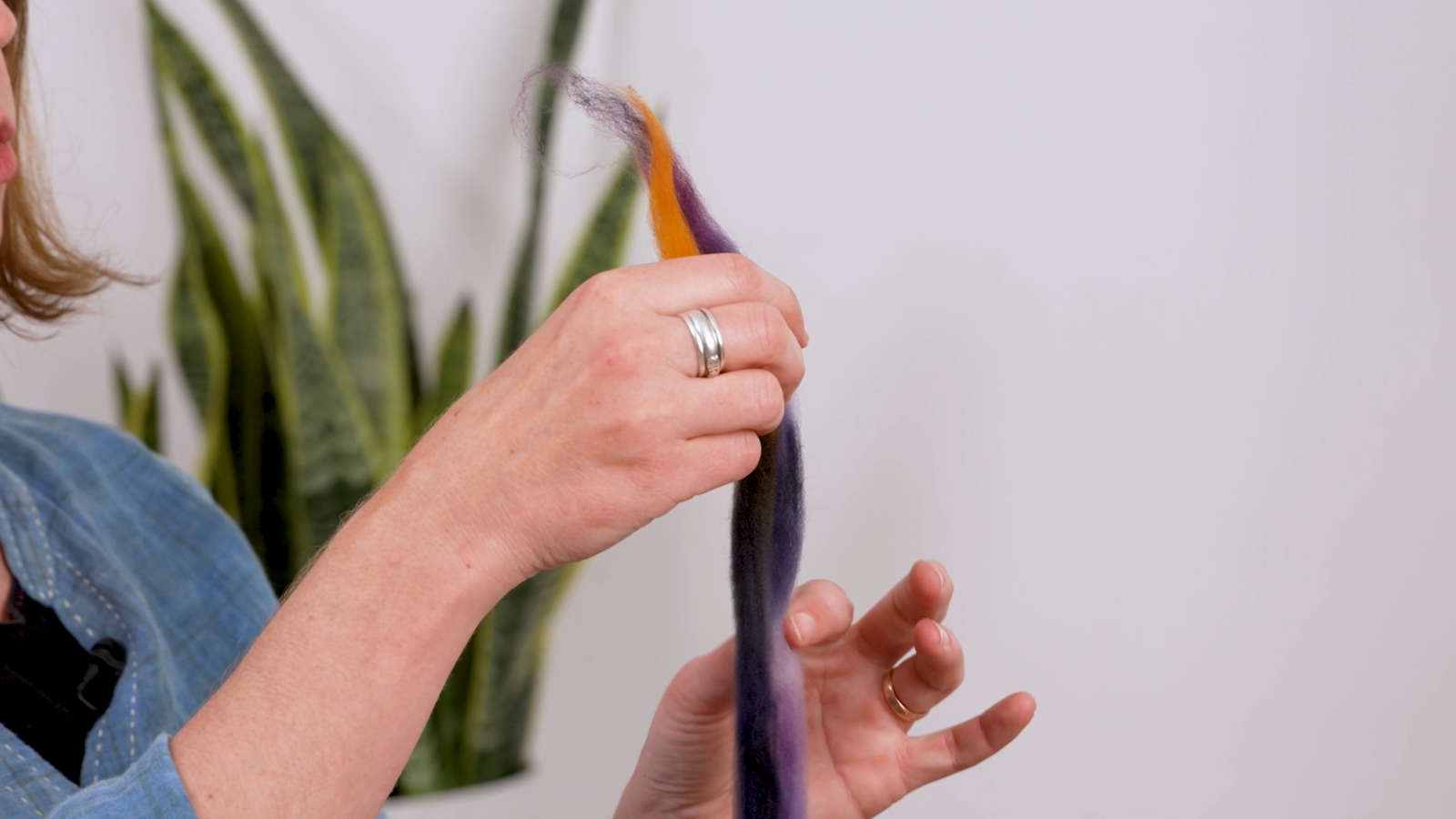
Holding one strip stacked on top of the other can help you manage the different fibers more easily.
Still Struggling? Try This!
As I was spinning my samples, Kate’s tips helped, but I still struggled to manage both strips of fiber without one completely taking over. I noticed that Kate used a short draw, giving her more control over the fiber, but I typically default to a longdraw, and my fiber supply was turning into a frustrating mess. Thinking back to how blended top and humbug fibers are made, I wondered if there was another technique I could use to unify the fibers before I started spinning.
I used a variation on Kim McKenna’s technique for dizzing off a handcard to predraft the two strips of fiber together. Kim shares the technique as a way to open up combed top for quicker spinning, but I wondered if carding cloth could act like an industrial gilling box. Instead of handcards, I used a blending board to take advantage of its larger surface area.
Step One: After attenuating each piece of fiber from side to side, I pressed the layers into the carding cloth, one on top of the other. I didn’t drag the fibers down to blend into the board like I would for a rolag or batt, but instead pushed the fibers straight down using a rocking motion.
Use a rocking motion to press the fibers straight down into the carding cloth. Photo by Pamela K. Schultz
Step Two: Then I gently predrafted all the way down the length of fiber. It took a couple of repetitions to work the entire length of the fiber, but the carding cloth gave just a little bit of extra friction to help join the two pieces of fiber together.
Slowly draft the fiber off the blending board. Photo by Pamela K. Schultz
The result? A marl that was much easier to spin!
The two pieces of fiber are now gently fused together and ready to spin. Photo by Pamela K. Schultz
Resources
Missed the earlier lessons in 5 Ways to Prep and Spin a Braid? Get started here!
Pamela K. Schultz is the editor of Spin Off. She knits, spins, weaves, and gardens in coastal North Carolina.
 This North Ronaldsay fiber is presented as a humbug preparation, with both dark and light fibers in the same piece of roving. Photo by Pamela K. Schultz
 Many colors in blended top often create a subtle effect in the final yarn and swatch. Photo by Becks of Tiny Fibre Studio
 Both of these yarns could be considered marled. On the left, each ply has a single color, and the color blending happens in the ply structure. On the right, each ply has marling in the singles, and the color mixing continues in the ply structure. Photo by Pamela K. Schultz
 Notice how the plyback sample enhances the color blend.
 Holding one strip stacked on top of the other can help you manage the different fibers more easily.
 Use a rocking motion to press the fibers straight down into the carding cloth. Photo by Pamela K. Schultz
 Slowly draft the fiber off the blending board. Photo by Pamela K. Schultz
 The two pieces of fiber are now gently fused together and ready to spin. Photo by Pamela K. Schultz