Subscriber Exclusive
Twisted Love: An Artist Measures Twist & Grist
Join Sahara as she talks about her approach creating yarns for a variety of projects.
Join Sahara as she talks about her approach creating yarns for a variety of projects. <a href="https://spinoffmagazine.com/twisted-love/">Continue reading.</a>
https://spinoffmagazine.com/cdn-cgi/image/format=auto/https://www.datocms-assets.com/75073/1783710097-210217_so_summer21-105-briscoe-header-mg.jpg?auto=format&w=900
Contents
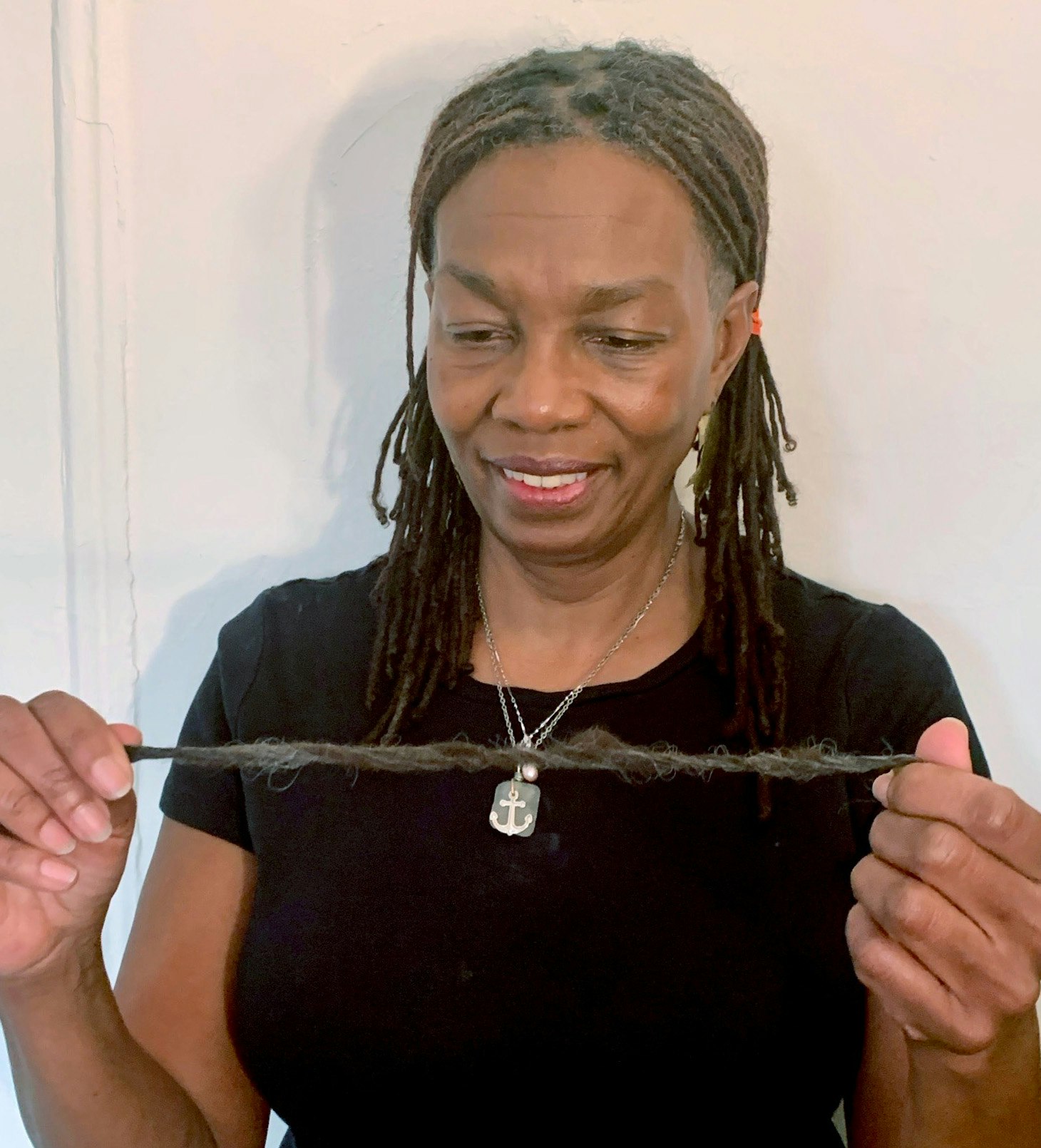
Whenever I pick up some fibers—animal, plant, or even a fabric strip—the first thing I do is twist them! In twist, I see the roots of an artfully functional textile. Simple twisting gives me an intuitive sense of what the fibers could do. Measuring the angle of twist allows me to quantify the twist. Balancing intuition and measurements allows me to unlock the possibilities of the little fiber twist between my fingers.
Before I was a spinner, I learned to knit, crochet, sew, dye, embroider, and weave. The first four skills were inherited; the last two I studied on my own. Combined with design training in college, these skills allowed me to enjoy a successful career as a fabric
developer in New York City’s garment industry for many years. Eventually, I wanted to work beyond the constraints of ready-made materials and trendiness. My love of textiles and the study of textiles were leading me toward the creation of blankets, rugs, and other fabrics. I wanted more room for expression, and I wanted to engage my familial needlework. This, as you might guess, led me to spinning when my explorations deepened into the inherent possibilities of yarn itself.
So here I am today, exhilarated by the feeling of simply twisting fibers between my fingertips. Making yarn focuses my creative attention. Having the ability to design textiles that are both artful and durable continues to arouse my curiosity, constantly stimulating my practice and personal art. I want to share a bit about my practice, and I hope it helps you explore more, spin more, and create more fearlessly.
SUBSCRIBER EXCLUSIVE
Whenever I pick up some fibers—animal, plant, or even a fabric strip—the first thing I do is twist them! In twist, I see the roots of an artfully functional textile. Simple twisting gives me an intuitive sense of what the fibers could do. Measuring the angle of twist allows me to quantify the twist. Balancing intuition and measurements allows me to unlock the possibilities of the little fiber twist between my fingers.
Before I was a spinner, I learned to knit, crochet, sew, dye, embroider, and weave. The first four skills were inherited; the last two I studied on my own. Combined with design training in college, these skills allowed me to enjoy a successful career as a fabric
developer in New York City’s garment industry for many years. Eventually, I wanted to work beyond the constraints of ready-made materials and trendiness. My love of textiles and the study of textiles were leading me toward the creation of blankets, rugs, and other fabrics. I wanted more room for expression, and I wanted to engage my familial needlework. This, as you might guess, led me to spinning when my explorations deepened into the inherent possibilities of yarn itself.
So here I am today, exhilarated by the feeling of simply twisting fibers between my fingertips. Making yarn focuses my creative attention. Having the ability to design textiles that are both artful and durable continues to arouse my curiosity, constantly stimulating my practice and personal art. I want to share a bit about my practice, and I hope it helps you explore more, spin more, and create more fearlessly.
[PAYWALL]
Twist and Mabel Ross
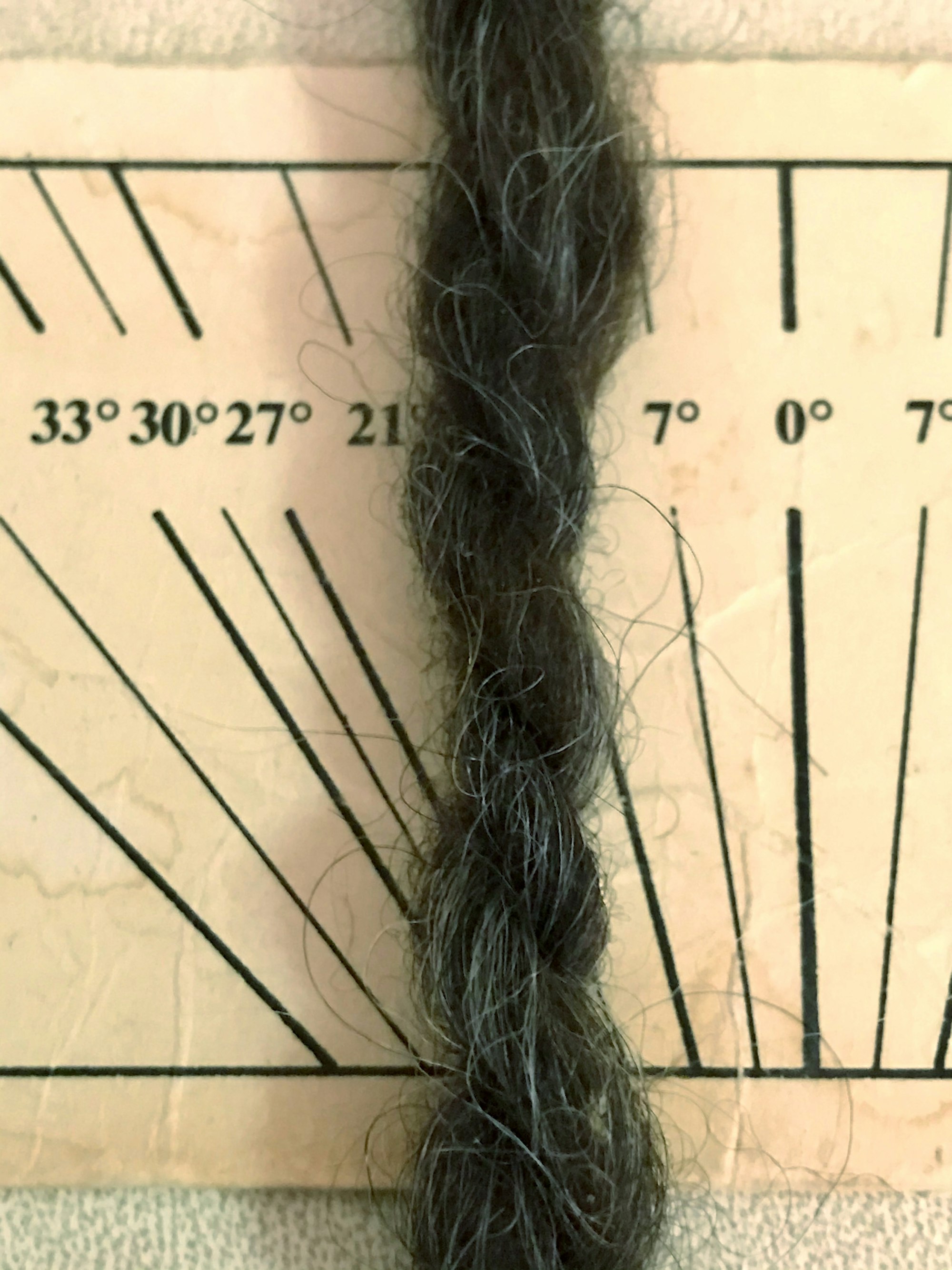
The Essentials of Yarn Design for Handspinners by Mabel Ross was pivotal to my understanding of twist power through twist angle. I learned that regardless of the size, yarns sharing the same twist angle will feel similar—hard or soft. There are, of course, many factors involved, but if spinning at its most basic is simply twist, I felt I could spin anything! My lapsed needlework and sewing skills gained a renewed interest because I could spin specifically for them! The overthinking that sometimes infiltrated my project planning diminished.
Understanding twist angle
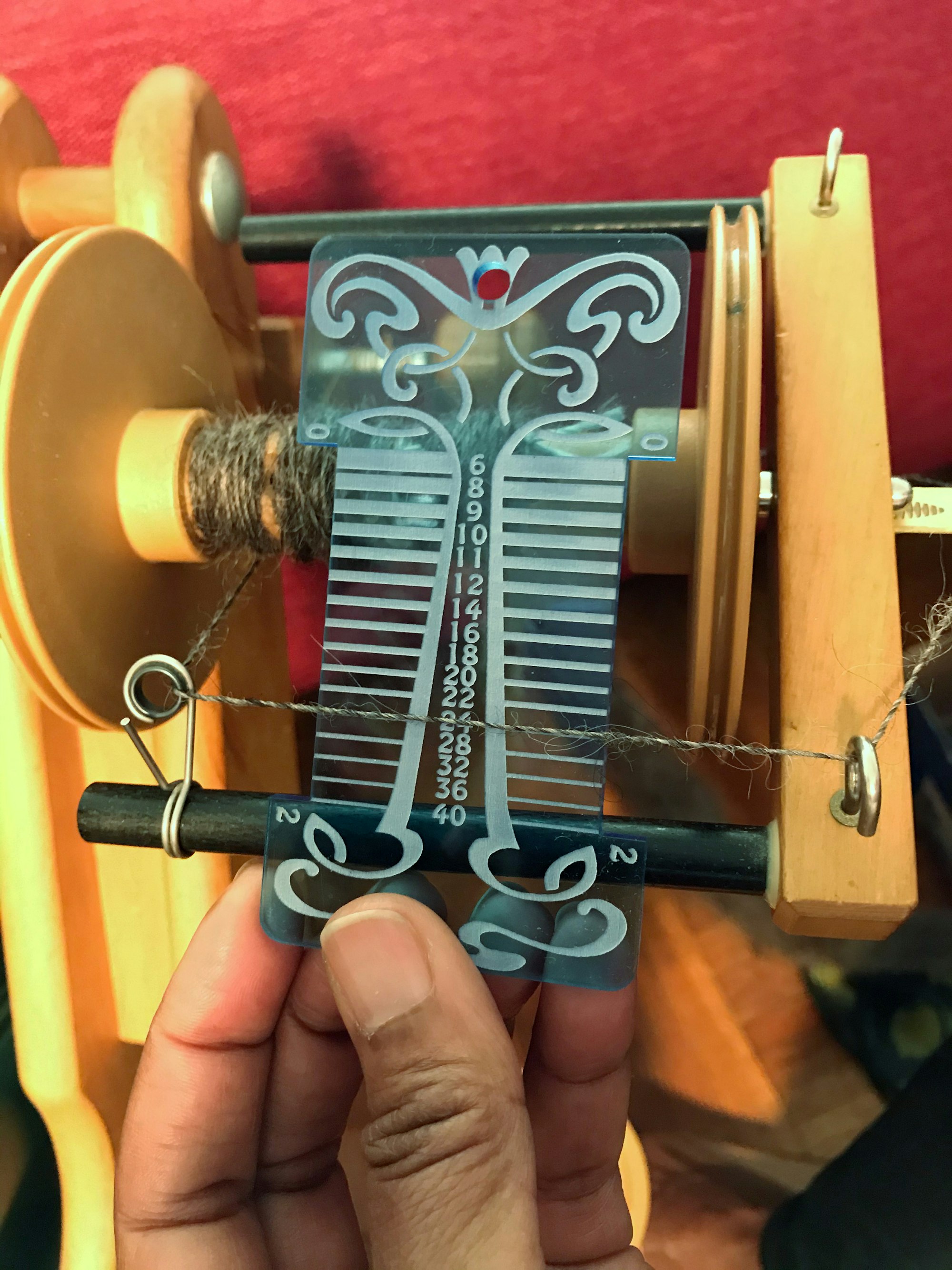
In her book The Encyclopedia of Handspinning, Mabel Ross discusses two ways to quantify twist: twist angle and twists per unit length. She also discusses grist, which she defines simply as “the size of a yarn.” Over the years, I’ve developed my spinning practice based on two of these: twist angle and grist. The tools I use allow me to measure a section of yarn that is even just a few inches long, making sampling quick, easy, and intuitive.
Sahara’s Method and Work
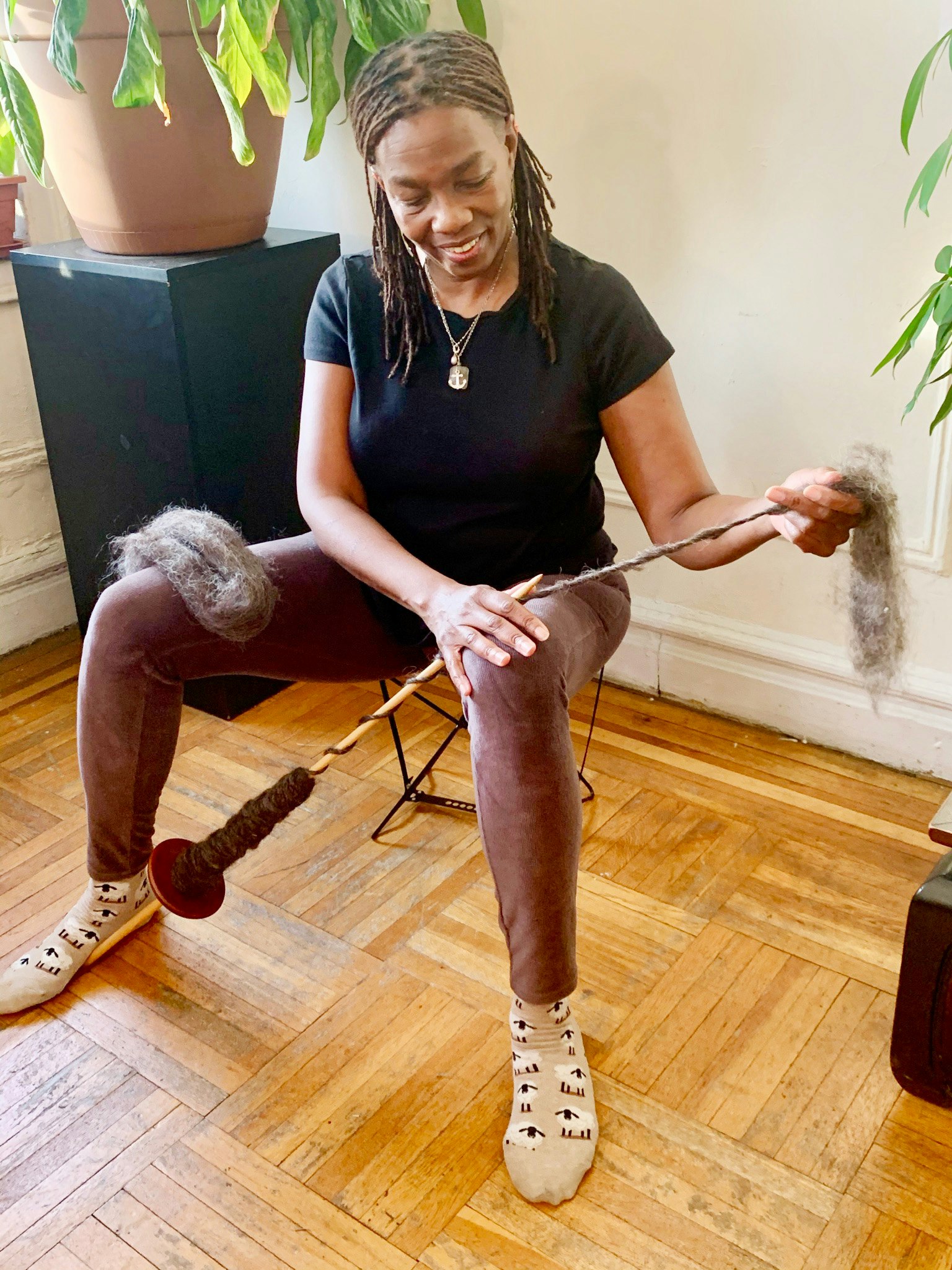
This simple approach works well for me: I take a group of fibers between my fingers and attenuate them until I’m close to the size singles yarn I want. Then I start adding twist with my fingers until there is enough twist to hold them together without being too tight. I lay it against my grist measure and note the size, and then I hold it against my twist-angle measure and note the angle. I may fold and ply it with my fingers and take more notes. Then I might experiment with adding more twist to the singles, depending on what I like to make and the job the yarn needs to do. When I find a twist sample with potential, I’ll prepare, spin, and ply a sample skein. After the skein is washed and dried, I’ll measure it again.
Woven and Hooked Boot Mat
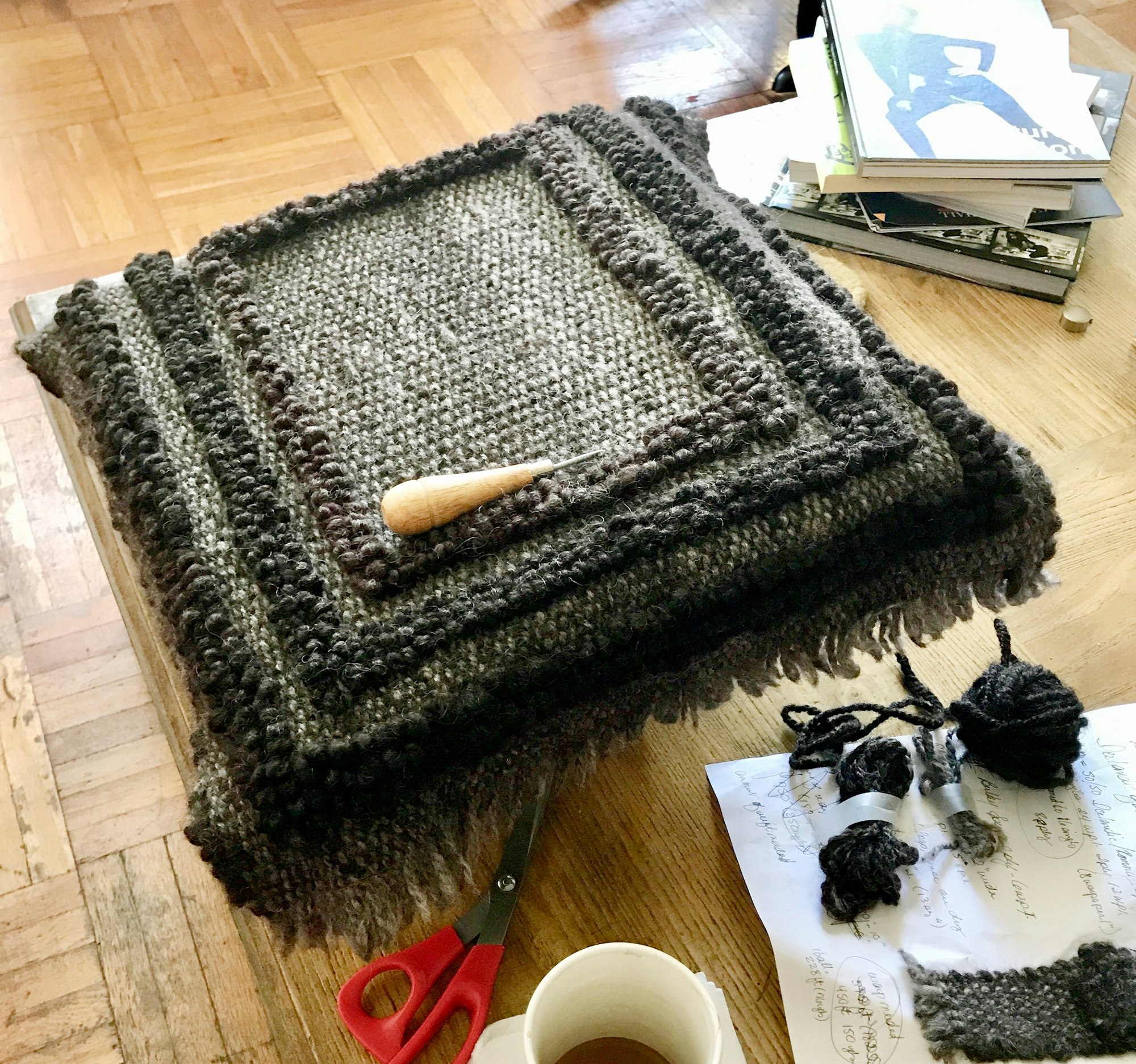
During the spring of 2019, I thought about making a new boot mat to catch the salt and dirt from our boots in the coming winter. With my bountiful fiber stash tugging at my guilt, my newly learned skill of rug hooking came to mind. Looped pile was an appropriate structure for a boot mat and easy to do. I didn’t want to use burlap or expensive linen as a foundation cloth, so why not spin and weave my own? The wool would shrink a bit in finishing, securing the loops. I would need to spin only two types of yarn: a moderately twisted yarn for the base cloth and a bulky, slightly softer plied yarn for the hooked pile. I was stoked!
Handspun for Base Cloth and Pile
I thoroughly blended the Romney and Icelandic in a 50/50 blend on my drumcarder, and then I dizzed the roving from the carder. I chose to spin with an American long-draw technique. Long draw allows me to see the grist and twist angle of my yarn over a
long length to maintain consistency. After setting the twist, the yarn bloomed to 8 wraps per inch (wpi) but was still very strong for both warp and weft yarn. To create the pile yarn, I drumcarded the Icelandic fleece with the tog and thel (long and short fibers) together, then dizzed the fiber into roving. I spun the roving using a Navajo spindle. These bulky yarns have a low twist angle (14 degrees), and this spindle makes it easy for me to achieve that.
Sampling and Weaving
Then, I wove a sample using Purl & Loop’s Swatch Maker 3-in-1 loom. It started out at 8 warps and wefts per inch but bloomed after finishing to 6.5 ends per inch (epi) and 5 picks per inch (ppi). I added a small amount of pile to the woven strip using a crochet hook. This small sample was intoxicating! I was making my own hooked rug from fleece to finish!
I warped my Glimåkra Emilia 19-inch rigid-heddle loom at 8 epi, which created a nice, close backing to hook into. I decided on a simple pile design, more effective for boots than beauty, and drew it onto the foundation cloth using white chalk. In the end, I didn’t full the back; it went on the floor right away. My foyer stayed clean, and I daydream about a larger rug.
My Twisted Crewel Adventure
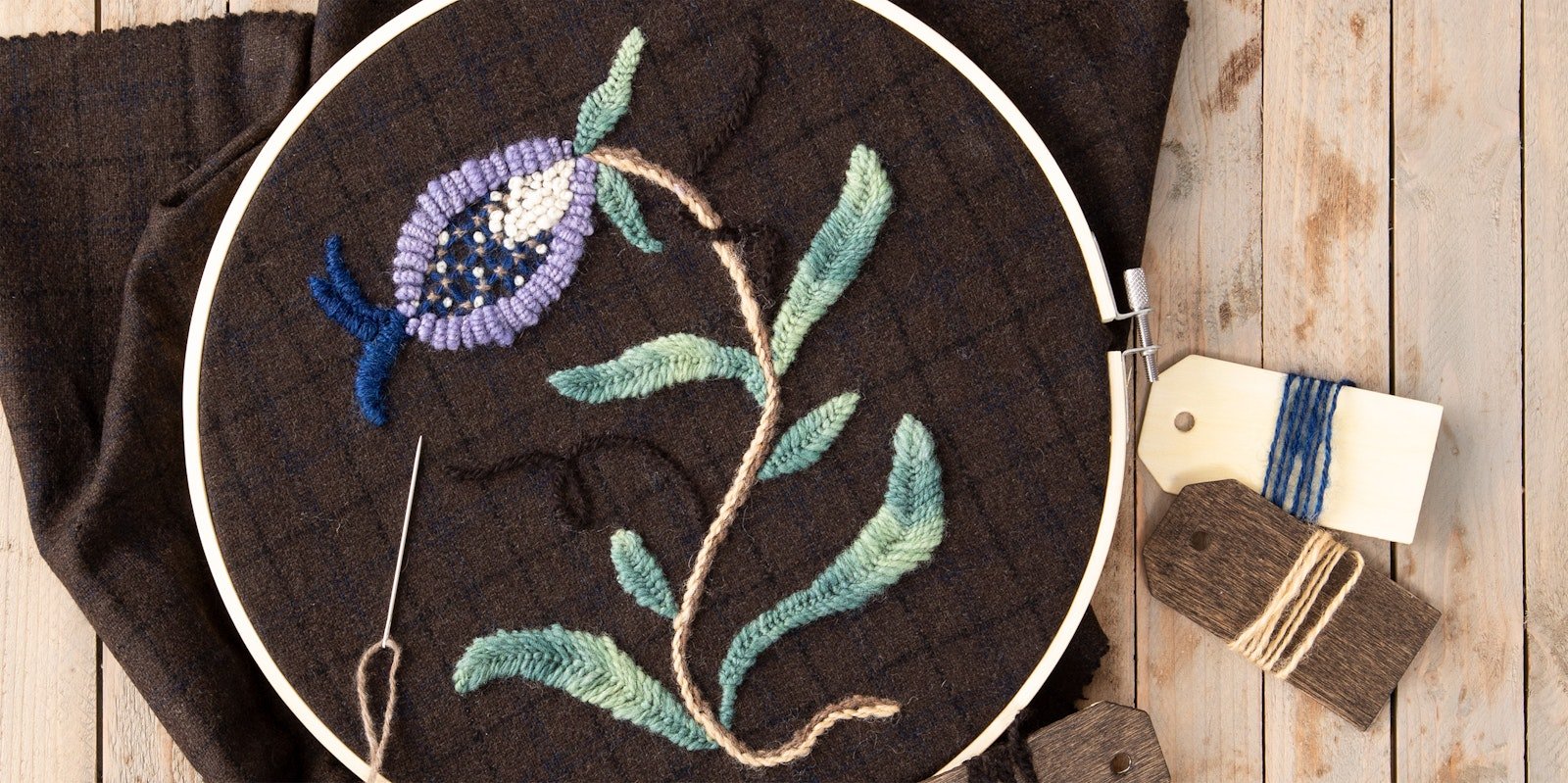
Embroidery was one of the skills I inherited that lay dormant until I read a Spin Off article by Kate Larson on spinning embroidery yarn (“Norwegian Embroidered Handcoverings,” Spin Off, Summer 2014). I’m a fan of English crewel embroidery
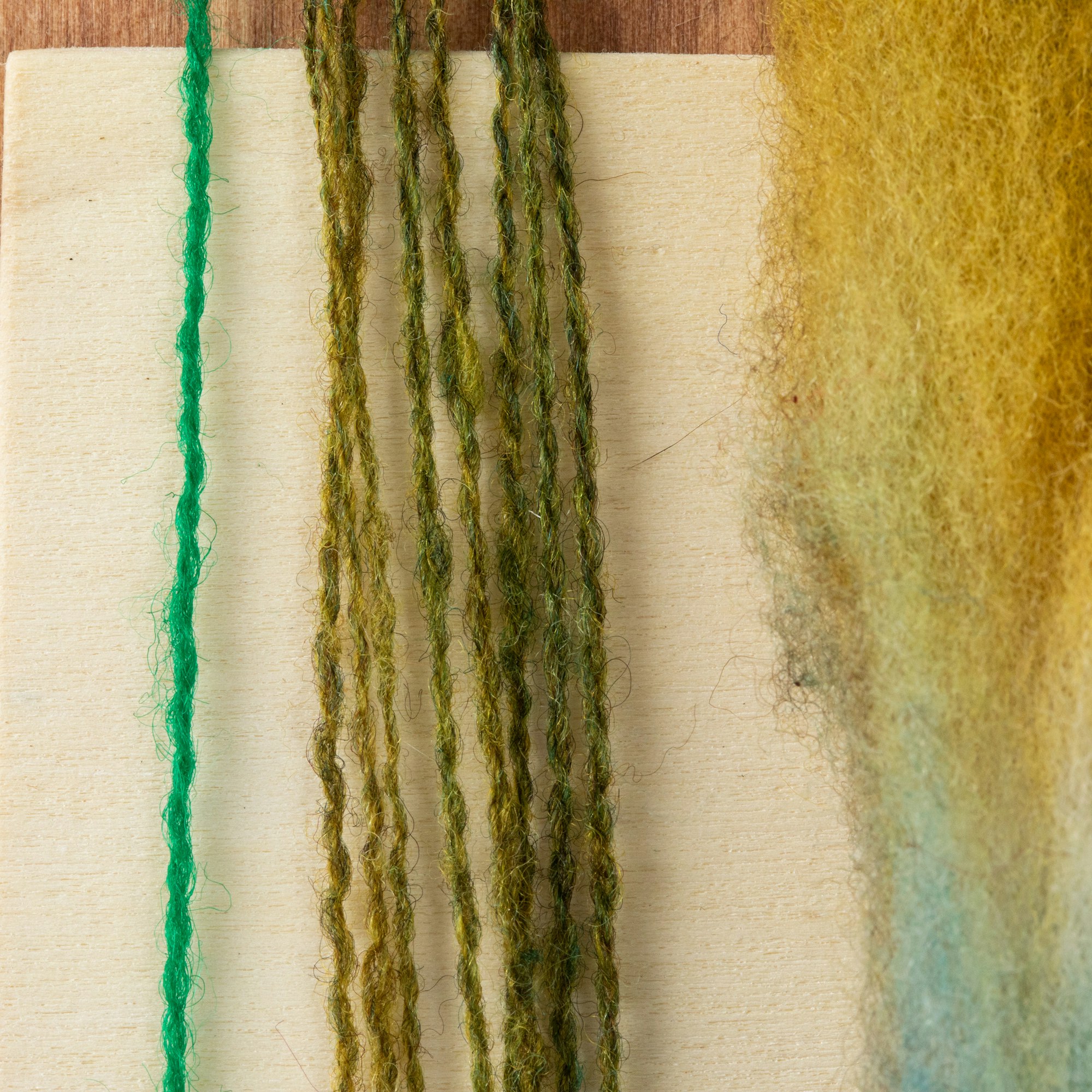
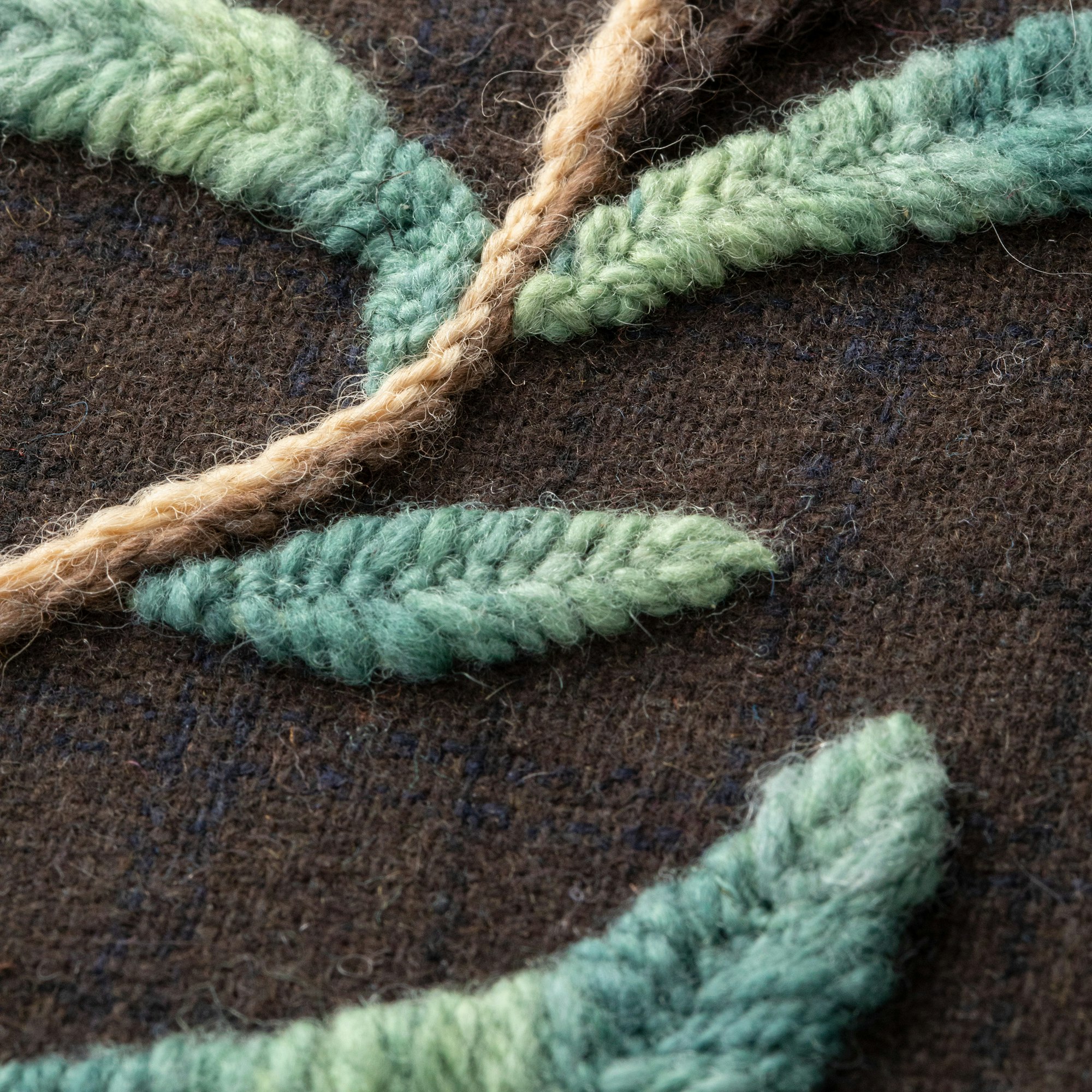
with its fantastical flowers stitched in wool yarn on a linen ground cloth. I purchased some Appleton’s crewel yarn to analyze and used the 30-degree twist angle in my handspun. However, I adjusted the grist to complement the thicker woolen ground cloth I selected. My two-ply yarns averaged 12 to 14 wpi. Yarns for crewel spin up rather quickly because you don’t need much yardage. What I was surprised to learn when I started stitching with handspun was the direction of twist—Z or S—matters greatly, particularly with stitches that twist around each other or where the twist interacts with directional design elements. For example, the flower leaves have stitches that lean left and right. The angle of the stitches interacts with the twist angle of the yarn, creating a visual difference. Sewing stitches, such as running stitch and backstitch, are not greatly impacted by twist direction.
Sahara’s experiments with matching Appleton’s Crewel Wool
For the sample piece shown here, I chose a slightly heavier woolen foundation fabric and spun thicker yarns from a variety of fibers. I’ve observed that in yarns spun from low-luster wools, the twist is visually less evident, so I spin a yarn that is comfortable to
work with and worry less about the visual impact of twist amount and direction. Silk and other highluster fibers, however, will act like high-gloss paint, intensifying the appearance of twist in the stitching. I now spin my yarn according to the type of fiber I have and how it will enhance my design on whatever ground cloth I’m using.
From Ready-Made To “I” Made
Twist, that most basic element of yarn, can give you the confidence to explore and spin many different fibers. When ready-made materials seem too trendy or costly, experimenting with twist can reinvigorate craft skills that had been brushed aside. You can even adapt new fabric crafts to your needs by spinning yarn—it’s all about the power of twist. Your creativity, like mine, will take a new turn.
Resources
- Glimåkra Looms, glimakrausa.com
- Hillcreek Fiber Studios, hillcreekfiberstudio.com
- Larson, Kate. “Norwegian Embroidered Handcoverings.” Spin Off (Summer 2014), 86–88.
- Little House Rugs, littlehouserugs.com
- Purl & Loop is now Yarnworker.
- Rainbow, Jane. Beginner’s Guide to Crewel Embroidery. Turnbridge Wells, England: Search Press, 1999.
- Ross, Mabel. The Encyclopedia of Handspinning. Loveland, Colorado: Interweave, 1988.
- ———. The Essentials of Yarn Design for Handspinners. Kinross, Scotland: Mabel Ross, 1983.
- Sunrise Sheep and Wool, sunrisesheep.com
This article originally appeared in the Summer 2021 issue of Spin Off.