
Contents
With such similar names, spinners often confuse and conflate terms like combo spinning and combo drafting. After all, you draft while you spin, so shouldn’t these two techniques be the same? Not quite! They’re really two separate techniques. What these color-spinning methods have in common is that they allow for somewhat predictable and pleasing results when combining fiber braids that are dyed in various colors and differing dyeing techniques, without the use of additional tools beforehand.
What is Combo Spinning?
Combo spining first went viral with Tracy Lew’s video on the topic went viral nearly a decade ago. But Tracy will be the first to tell you that she didn’t invent this technique or the concept—she merely shared her method in order to inspire others. And plenty of us have found this technique inspiring!
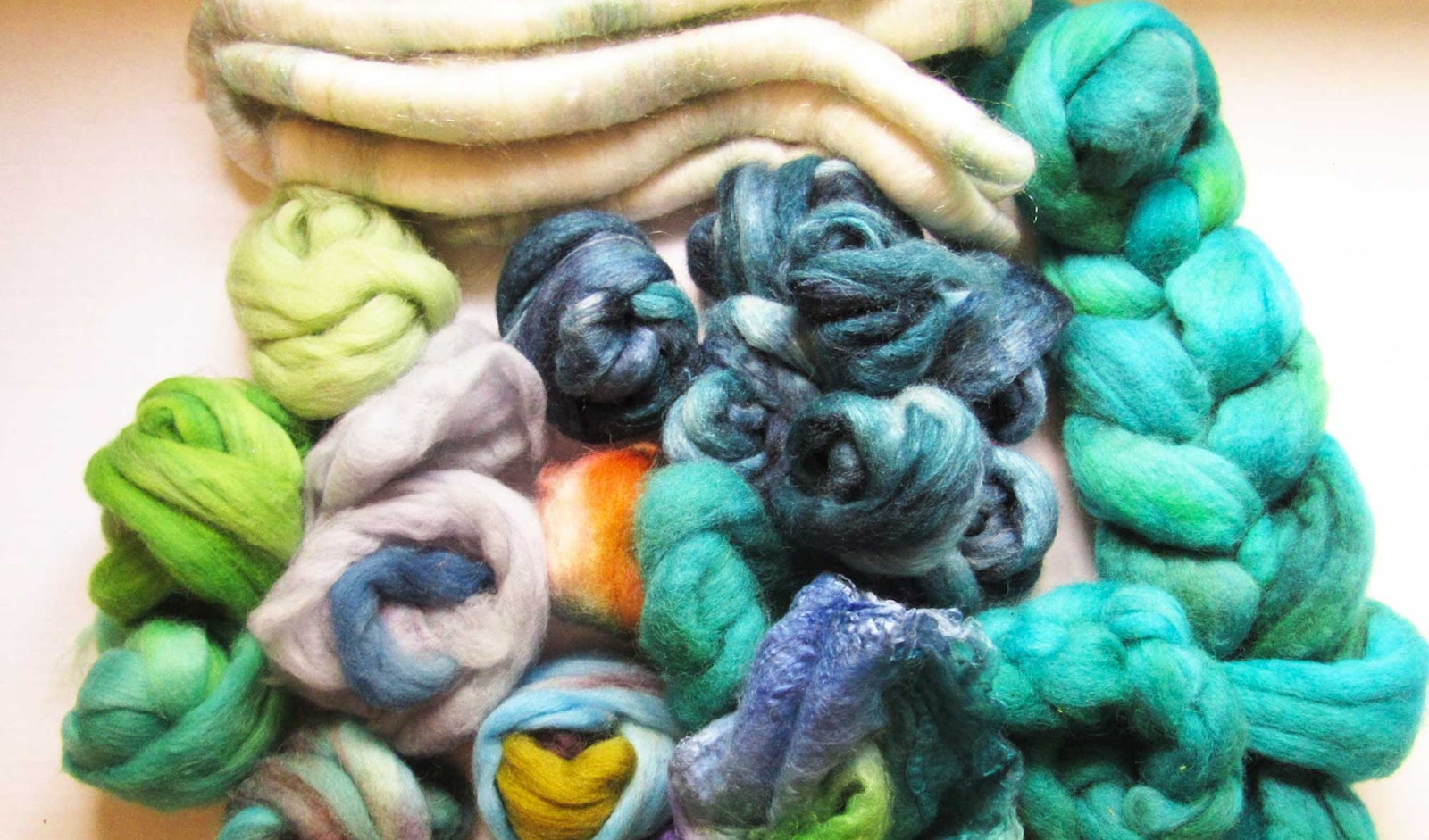
In combo spinning, several braids of hand-painted fiber are each split into 16-ish similarly narrow widths and shorter lengths, thereby shortening the runs of color while allowing for easier spinning. These strips are pooled together, then spun and plied randomly. The colorways may be unified from the outset or disparate. However, because they have been mixed together, the result is still pleasing because it creates a kind of color harmony.
Combo spinning is so appealing because it enables spinners to make use of a broad selection of hand-painted fibers (and even breeds or blends) that were likely purchased at different times, moving several braids out of stash and yielding a one-of-a-kind and unified batch of yarn. Combo spinning is often used for sweater quantities, but it’s suited for any approach that needs more than one braid. It’s a relaxed and incredibly fun exercise, and the arbitrary nature of this technique can be a skill-builder all its own. One caveat: The random nature of combination spinning can make reproducing the yarn difficult if you end up needing more yarn.
 The magic of combo spinning begins with splitting your fibers down into nests weighing roughly a quarter ounce each (7 grams).
What is Combo Drafting?
Combo drafting is when finger-width (or narrower) strips of fiber are held parallel, then drafted as one unit, swirling the colors together as twist is introduced. This technique is more challenging than combo spinning, so you’ll want to use fibers that are similar in traits and in composition/preparation for best results. Other tips:
- Pre-draft your narrow strips together while holding them parallel
- Use a short draw
With practice, spinners can “blend” together multiple colors.
Combination drafting is an excellent way to create your very own intentionally-spaced marled and variegated yarns. I like it for muting or softening colors that are otherwise too stark and contrasting for my taste.
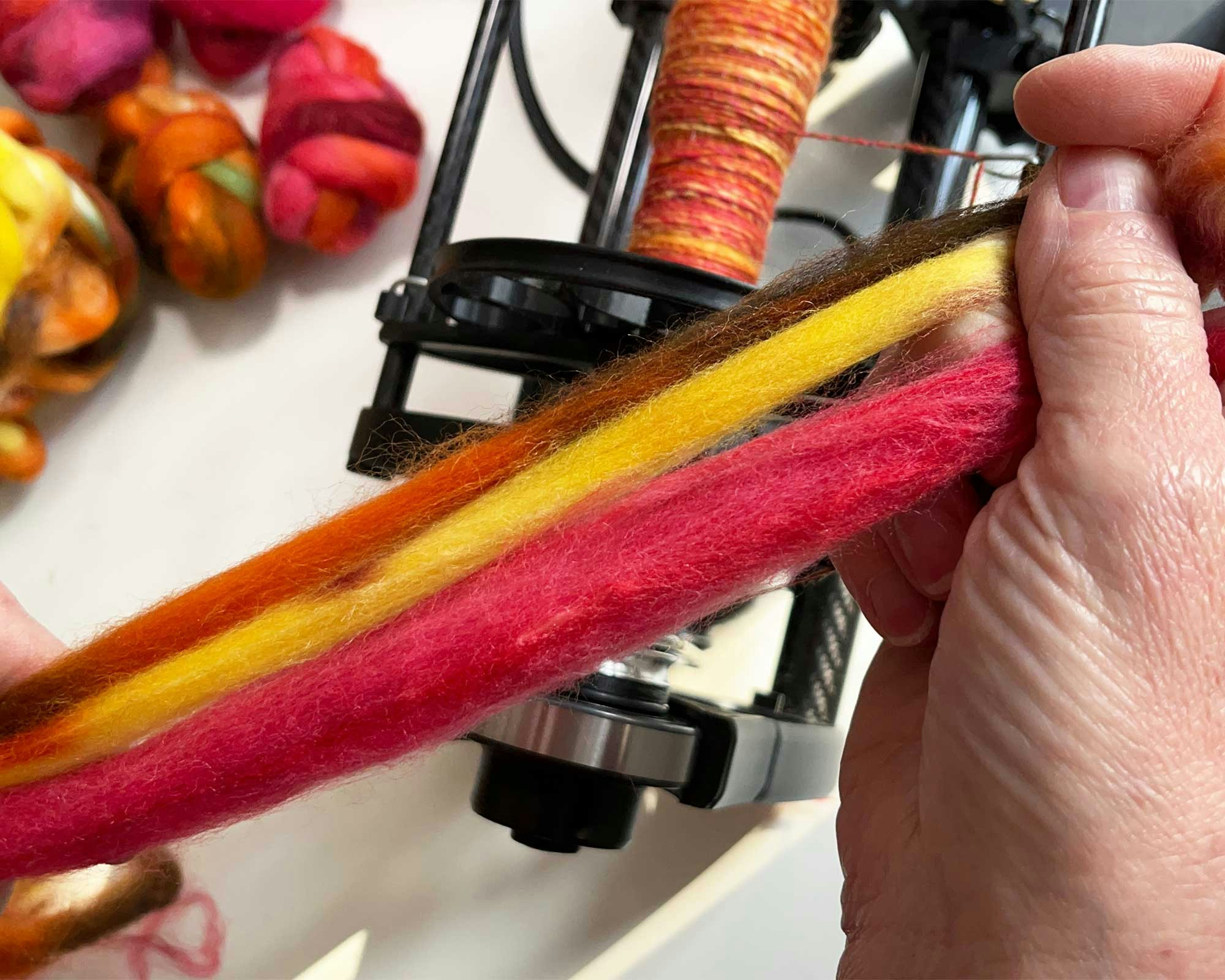
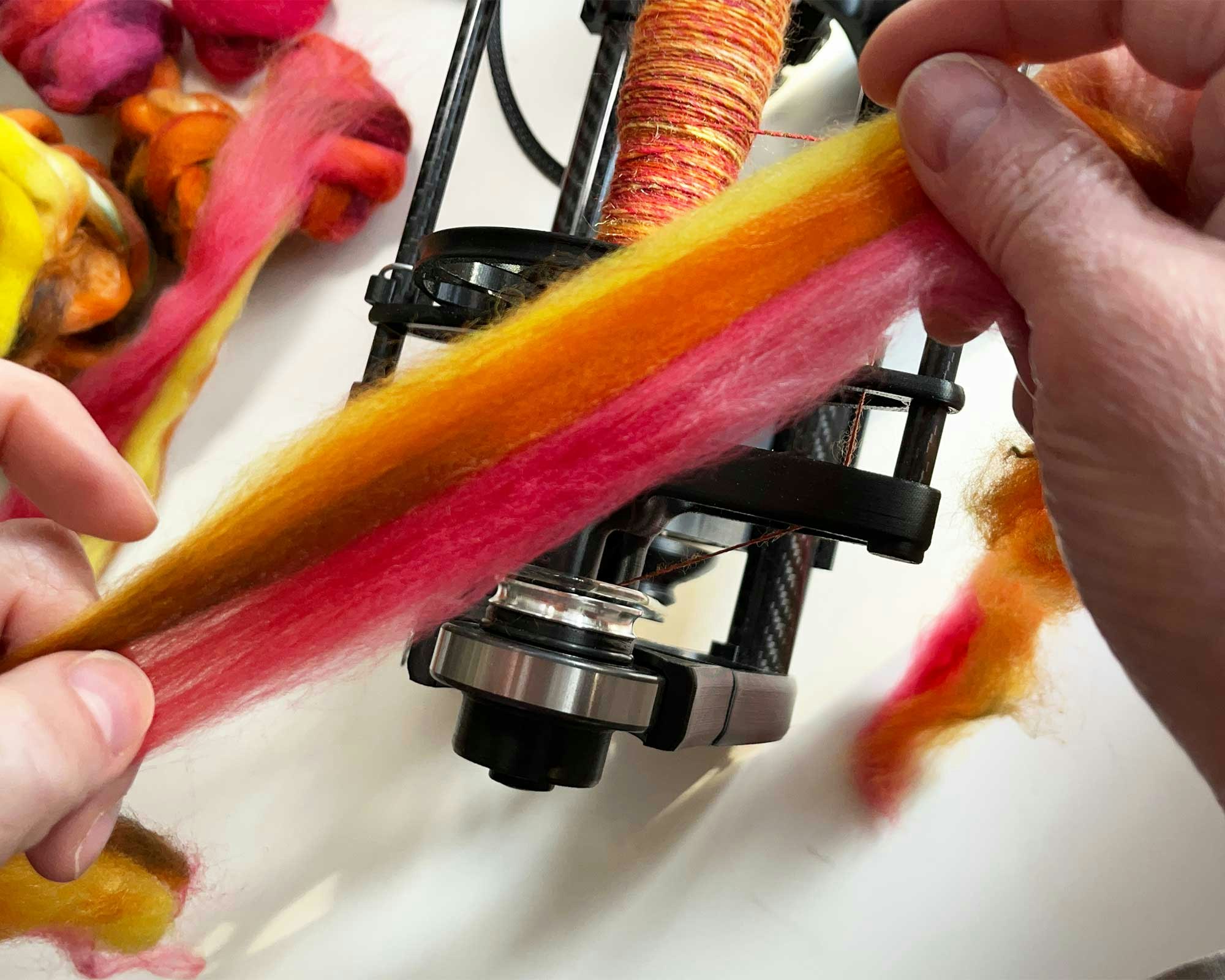
When learning how to combo/parallel draft, use narrow strips (left) and pre-draft them as a unit (right). The fibers will hold together better when you then apply a short draw, making unified spinning easier.
What is Combo Plying?
Combo plying is just at it sounds, though it’s often mislabeled as combo spinning at the outset by spinners who want to “combine” otherwise unrelated fibers or colorways. Here, different braids, batts, or rolags are each spun separately into individual strands, then plied together for more complex color and textural results.
Combination plying is a good way to handle fibers with highly disparate traits and staple lengths, such as cotton and silk. While these fibers could be tricky to thoroughly blend and spin smoothly, spinning each fiber separately and then plying the strands together yields a yarn that blends the characteristics of each fiber without the extra fuss.
Note: Unlike in combo spinning and combo drafting, in combo plying, each strand of singles is spun in the manner best suited for it individually, even if this means that your singles have differing amounts of twist at the outset. Plying under tension helps this work out in the end.
 Combination plying is ideal for turning fibers of different preparations and characteristics into a finished yarn that behaves as desired
Customize Your Spin
Your stash is filled with potential just as it is, using any of the above “combo” techniques as your starting point. Better still, any aspect of combination spinning, drafting, and plying can be . . . well, combined however you like. Whichever method you use, don’t forget to sample before committing to a larger spin, and be sure to spin up a little extra, just in case.
Resources
- Find The PassioKnit Spinner on YouTube.
- Read Debbie’s article that kicked off the combo spinning craze.
- Get 5 Tips for Choosing Combo Spinning Fiber.
This post was originally published on Feburary 23, 2026; updated February 24, 2026.