Subscriber Exclusive
Gathering Flax, Sharing Stories
How Antique Flax Can Connect Us to the Past
How Antique Flax Can Connect Us to the Past <a href="https://spinoffmagazine.com/gathering-flax-sharing-stories/">Continue reading.</a>
https://spinoffmagazine.com/cdn-cgi/image/format=auto/https://www.datocms-assets.com/75073/1766194054-bertas-flax-header2.jpg?auto=format&w=900
Journey with author Christiane Seufferlein into Austria’s flax traditions, where dowry chests filled with flax unlock forgotten family histories and have sparked an international revival of flax growing and processing. This story of resilience and the power of fiber to bring communities together initially appeared in the Summer 2025 Spin Off issue. We are delighted to share an excerpt of it with you here. Enjoy!
—Spin Off editors
Flax has been a defining part of my work and everyday life in Austria for over four years now. In 2020, I received a dowry chest of over 175 pounds (80 kilograms) of flax fiber from a woman named Berta. Her son was looking for a good home for his late mother’s wedding dowry. It was far too much to use and spin myself, so I gave it away online, thus sending not only the fibers but also Berta’s story around the world.
What began as a onetime project has now become a way of life for me—collecting flax and stories and then sharing them with a growing community of spinners. So far, over 50 lives that are well documented in textile material are waiting to be written about properly. Sometimes my work even reunites sisters and brings back family heritage.
SUBSCRIBER EXCLUSIVE
Journey with author Christiane Seufferlein into Austria’s flax traditions, where dowry chests filled with flax unlock forgotten family histories and have sparked an international revival of flax growing and processing. This story of resilience and the power of fiber to bring communities together initially appeared in the Summer 2025 Spin Off issue. We are delighted to share an excerpt of it with you here. Enjoy!
—Spin Off editors
Flax has been a defining part of my work and everyday life in Austria for over four years now. In 2020, I received a dowry chest of over 175 pounds (80 kilograms) of flax fiber from a woman named Berta. Her son was looking for a good home for his late mother’s wedding dowry. It was far too much to use and spin myself, so I gave it away online, thus sending not only the fibers but also Berta’s story around the world.
What began as a onetime project has now become a way of life for me—collecting flax and stories and then sharing them with a growing community of spinners. So far, over 50 lives that are well documented in textile material are waiting to be written about properly. Sometimes my work even reunites sisters and brings back family heritage.
[PAYWALL]
Living History
The fiber is also a means to open the door into the pasts of women who are still with us. Whenever I visit a home and sit down to talk with a woman who owned a dowry chest, I ask about her work with linen and wool and what it meant to her. Questions about a woman’s work were rarely asked, and showing appreciation for this work was even rarer. It was normal
to spin and weave for the family, to grow and tend the flax, shear the sheep, and knit socks and sweaters to keep everyone warm. It was not a choice to do so—it was a necessity. I admire their work and dedication, and I tell them as much. Sometimes I get out my handspindle and show my own spinning skill that is much less refined, but it creates an instant bond. I always thank them for their work before I leave, and I am rewarded with a proud smile every time.
Flax and wool are our textile roots in Europe. Evidence shows these were the first fibers we grew and processed. This work defined us, especially in my area, where flax was so much more than just a fiber. It offered the opportunity to earn a living, to send children to school, and to pay farmhands. For smaller farms, flax was the only crop that could be sold for a profit. That’s also the reason for the dowry chests I encounter in Austria that are filled with stricks of flax instead of ready-made linen—this gift was the only financial security the women had. In emergencies, the flax would have been sold. When I find a chest, I can assume that the worst didn’t happen, and the flax was handed down for generations.
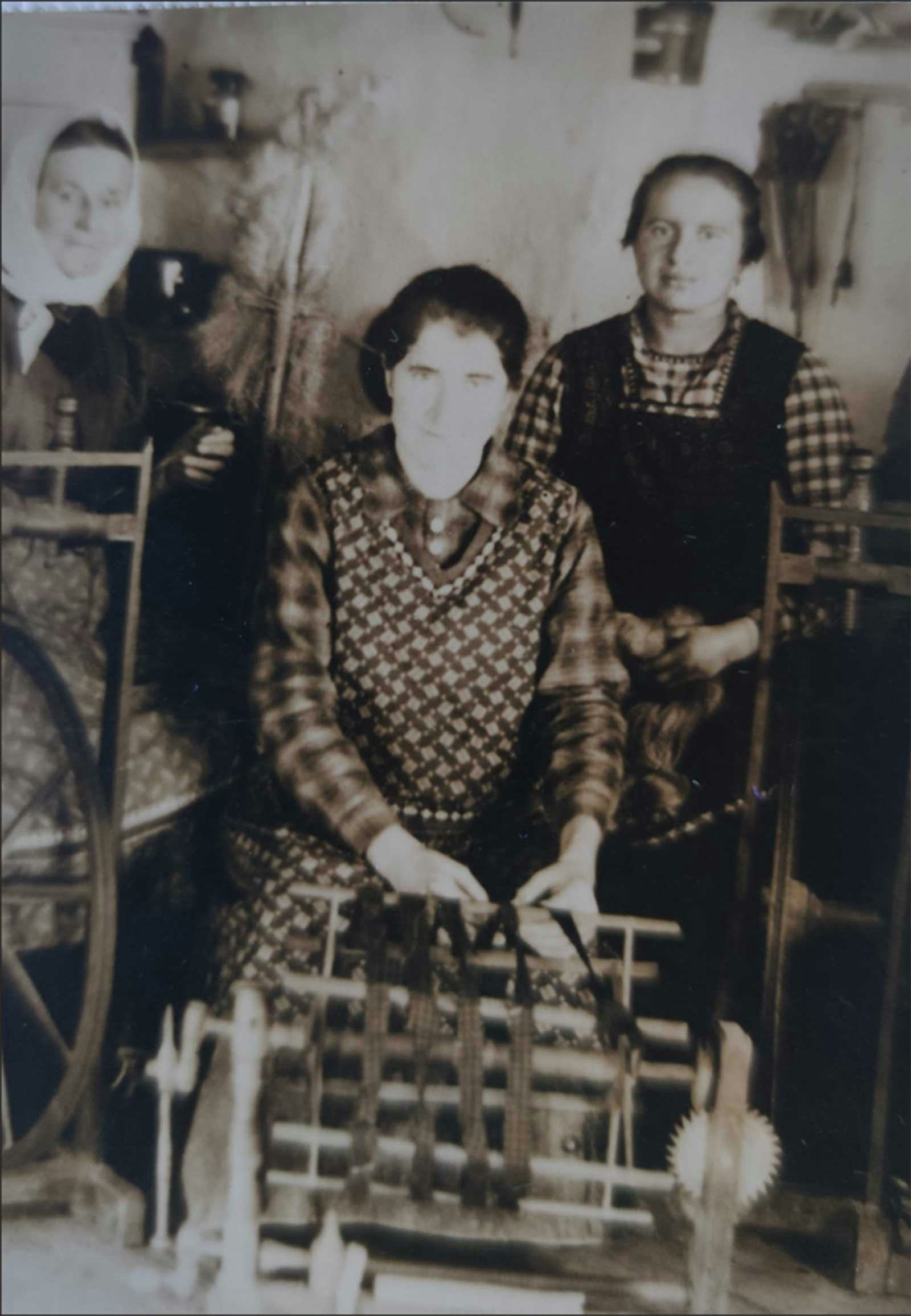
Anna, pictured in the center of the photo on the left, passed down her flax to her neice Elfriede, in the photo on the right. Photos courtesy Christiane Seufferlein
Rebuilding Communities
It hurts me to see how quickly the knowledge and the stories around flax and linen have been lost, not only in Austria but also all over Europe. Thanks to Berta, I was able to form an international community. With enthusiastic support from guild members, I set out to bring flax back into people’s everyday lives. My goal is not only to share the flax stricks with spinners around the globe but also to share my knowledge online and offline through workshops and creating larger networks. Coming together is more important than ever.
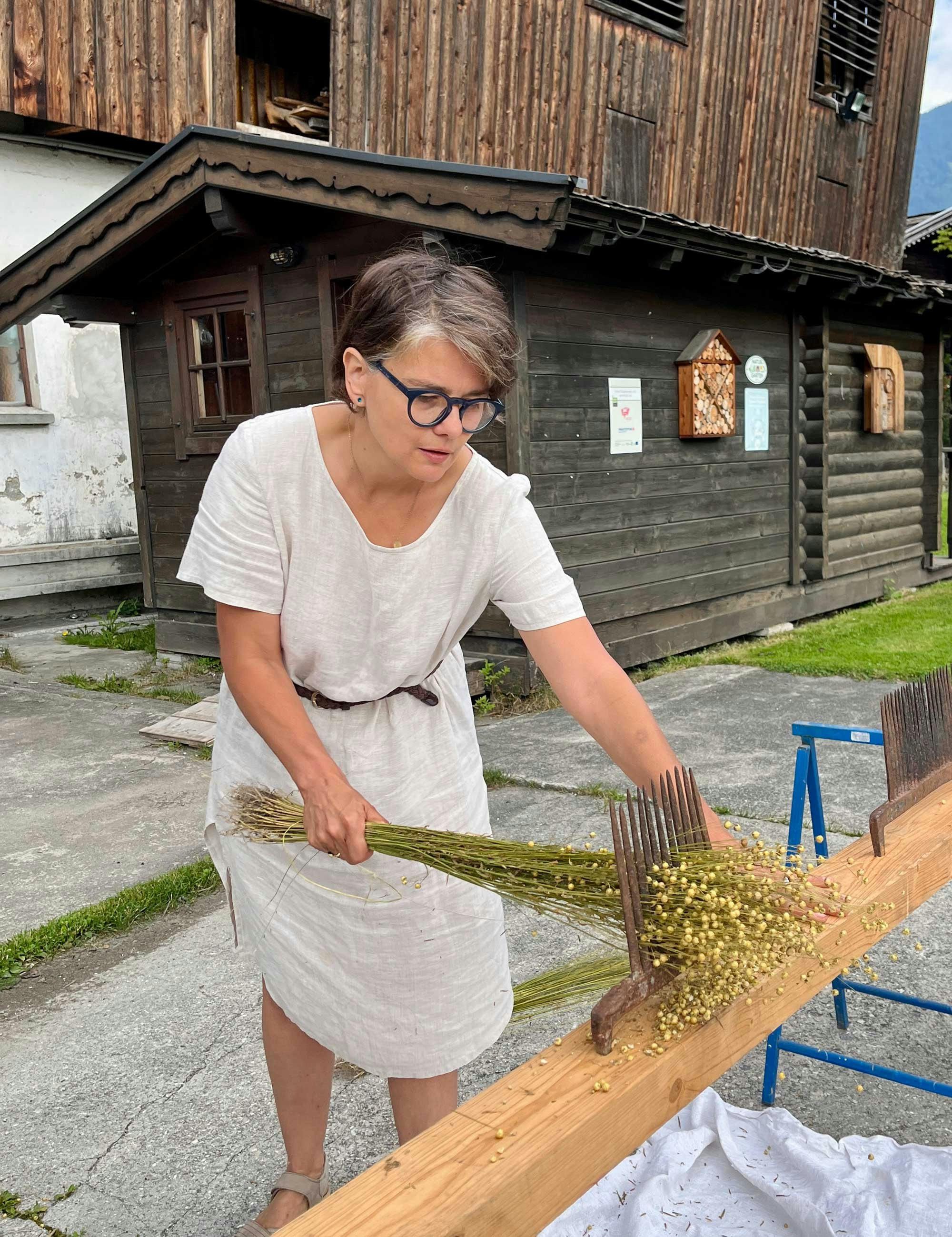
Flax offers this amazing experience of community. Other than wool—which was often processed in small batches on the farm and by one person—flax has always been a community affair. From harvesting to spinning, people came together to get the work done. When the breaking and hackling started, one would hear the clatter of the wooden tools and the chatter of many voices for weeks when the people from one farm would help their neighbors and vice versa. When the long winter evenings offered more time for textile work, women would travel from farm to farm to spin, laugh, connect, and support each other.
 Processing flax is a community affair.
This sense of community is something we seem to lack in our modern world. During the COVID-19 pandemic, when isolation was part of our everydaylife, flax became a way of escaping. The Swedish Hemslöjden craft association wanted to offer some relief and asked people to start growing one square meter of flax in their gardens. Via videos and newsletters, participants were guided through the process and could connect on- and offline—being outside, working together. The idea spread not only within Sweden but also to the whole of northern Europe,
and it is still around four years later. Perhaps you’ll be inspired to plant your own flax, too.
This year, I took the flax-growing movement to Austria, Germany, and the Czech Republic, hoping it will grow and thrive in the communities I visited. There is a powerful call to come together and connect through the love for fiber and handmade textiles. As the work continues, I’m excited to share that members of Berta’s Flax guild, traveling from all around the world, will come together in Austria in summer 2025 to follow in the footsteps of local flax traditions.
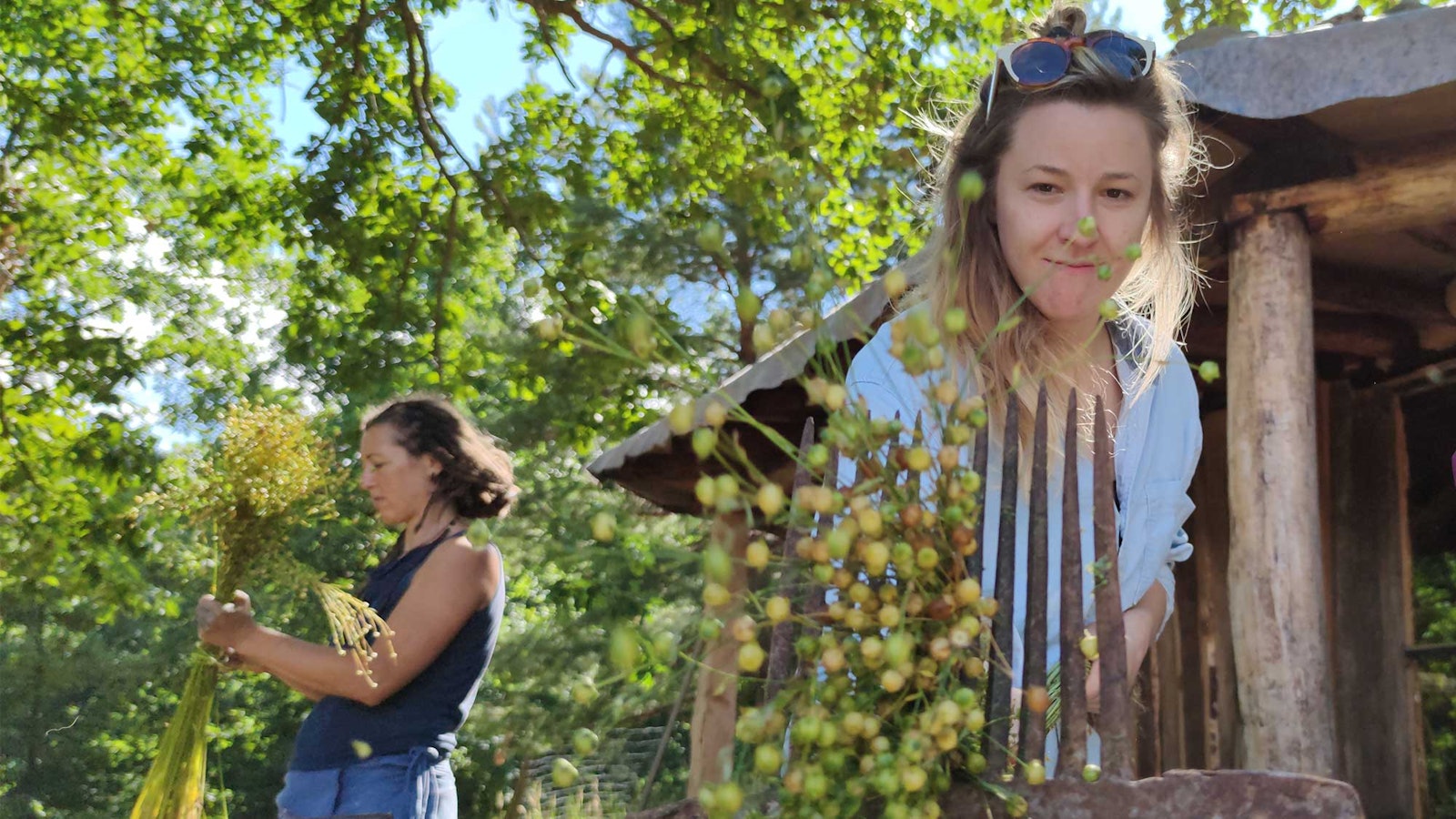
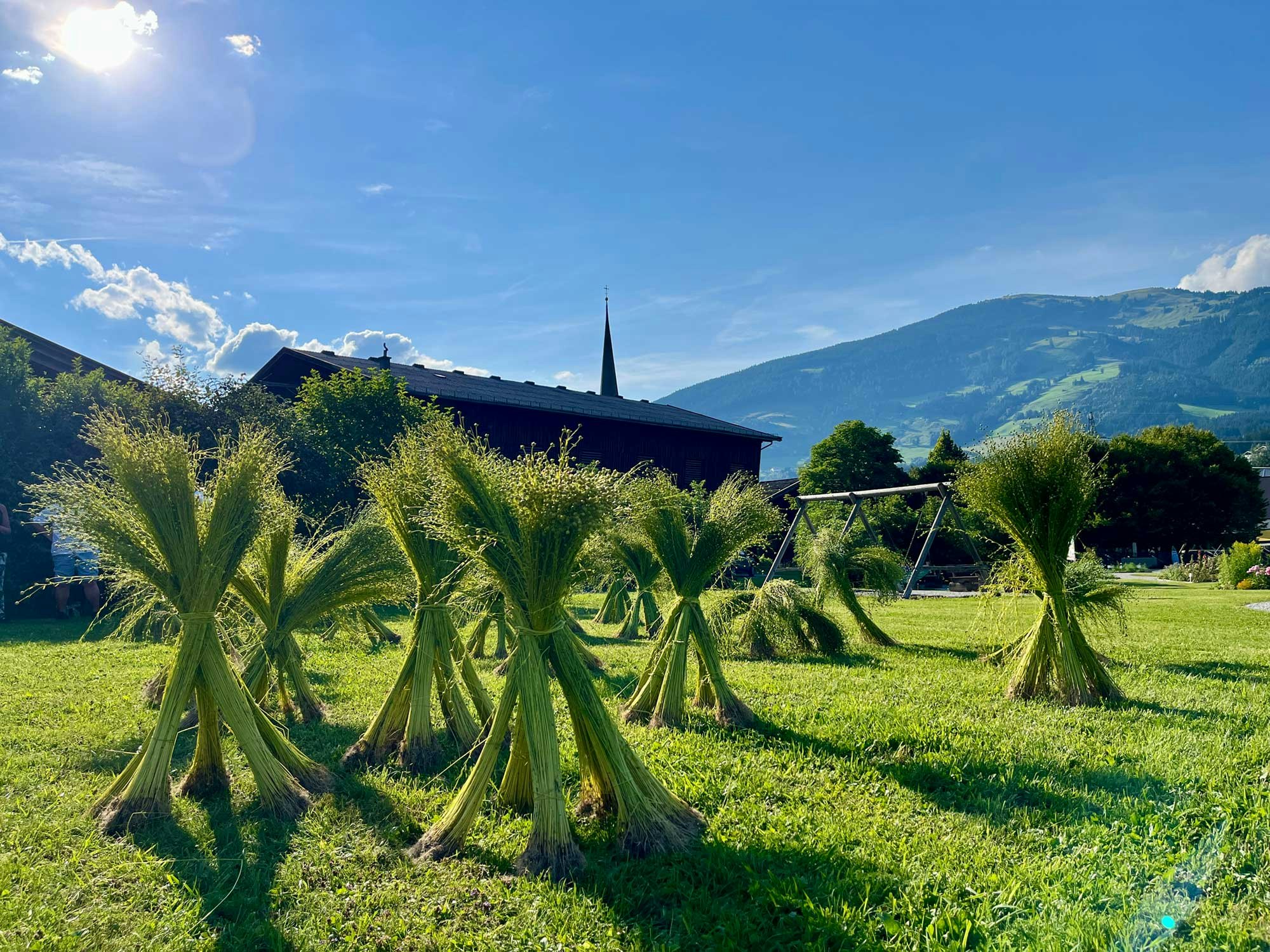
Flax after harvest (left). Christiane rippling flax at a 2024 workshop (right).
We are fortunate enough to have some remnants of our flax past to see, touch, and experience, but even without a physical reminder, this past is in all of us. I keep encouraging people to talk to their mothers, grandmothers, or elderly neighbors about textiles and their production because those everyday items teach so much about being a family, being human, and being connected. I will be forever grateful for the gift of Berta’s flax and will honor it by trying to keep her story—and our collective stories—alive.
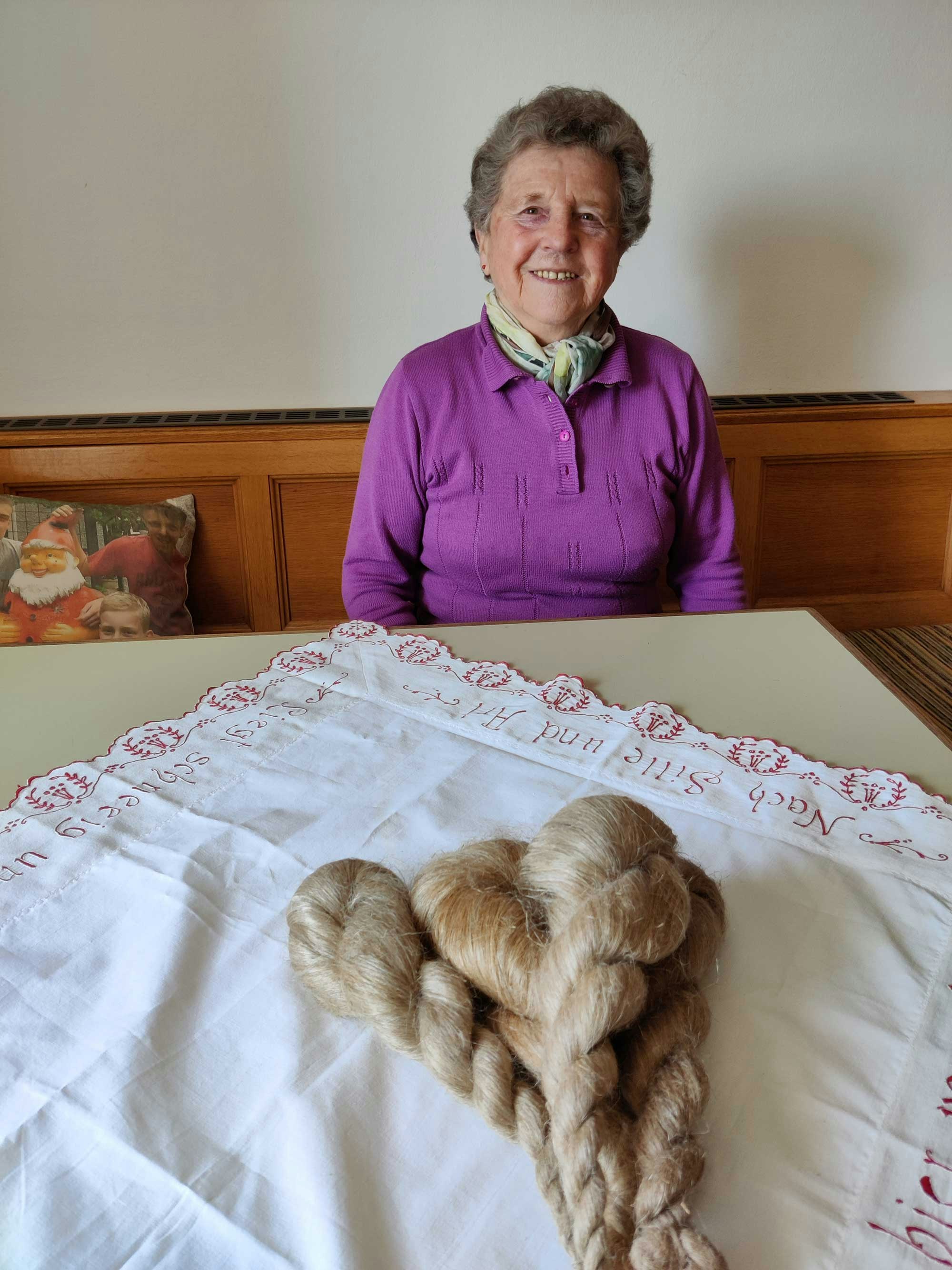
 Some antique flax and linen cloth from Berta’s Flax Project. Photo by Matt Graves
Remember that if you are an active subscriber to Spin Off magazine, you have unlimited access to previous issues, including Summer 2025. See our help center for the step-by-step process on how to access them.
Resources