
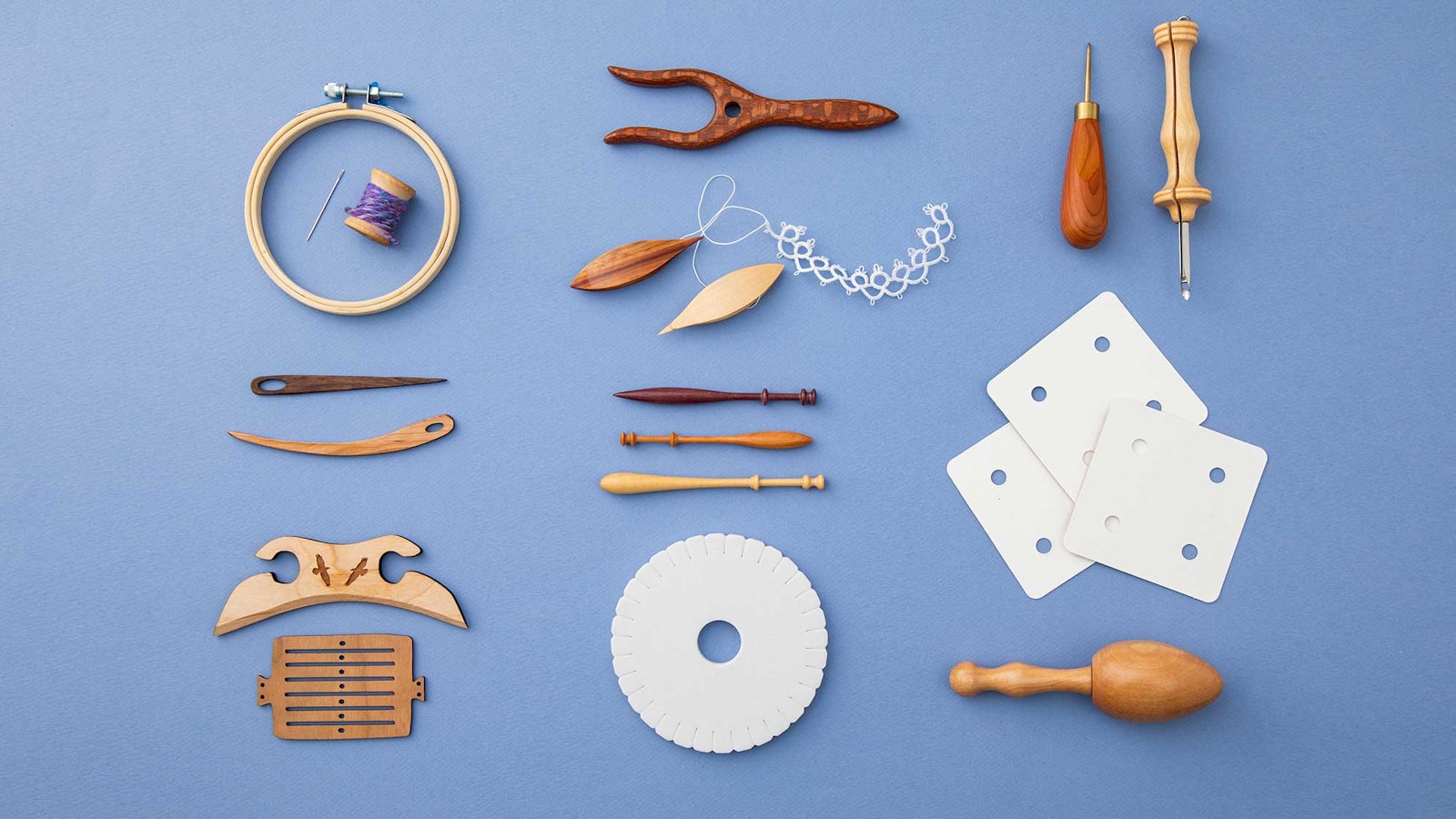
You’ve made all that handspun—now what do you do with it? It’s a perennial question most of us have, and once we’ve made all the hats, scarves, and mittens we (and our loved ones) can use, many spinners turn to new crafts to keep our fingers busy. Here are some of your favorites on the Spin Off website—plus a few more to explore!
The best part? Many of these techniques require simple tools you might already have, take just a tiny bit of yarn, or both. So take a look, and discover a new way to put your handspun to use.
Nålbinding
Nålbinding is an ancient technique that’s seen a resurgence in recent years. Besides yarn, the only tool you need is a needle. Start off with Nålbinding Basics: The Oslo Stitch, then explore our Nålbinding Collection.
 Nalbinding, typically pronounced noll-bin-ding, means “needle binding” or “needle linking” in Norwegian. Photo by George Boe
Kumihimo
Kumihimo is a Japanese braiding technique that can be as fancy or as simple as you’d like, but the results are always stunning. It’s a great way to use up little bits of handspun. Get started with Kumihimio 101 then dive deeper with Kumihimo Next Steps.
 Make a variety of braids with a little bit of yarn and a simple braiding disk. Photo by Angela K. Schneider
Visible Mending
We all have that beloved garment that’s seen better days. Instead of giving up on it, give Visible Mending a try! Whether you use a darning egg or a darning loom, visible mending is a great way to show off small bits of handspun and breathe new life into old garments.
 Leftover yarns as short as 6 inches can be used for mending, or you can spin a few yards of several colors to create a new mending palette. Photo by Kate Larson
Backstrap Rigid Heddle
Knitting needles and crochet hooks aren’t the only small, portable tools that let you use your handspun yarn just about anywhere. Backstrap looms are among the oldest looms, and they’re still used around the world today—for good reason. Get your feet wet weaving handspun bands Kate Larson’s free Backstrap Rigid Heddle Basics, then dive deeper with Weaving Pickup Bands.
 Kate will show you how to warp and weave this handspun band using a small rigid heddle, like the one shown here. Photo by Kate Larson
Twined Knitting
Twined knitting, or two-end knitting, refers to a method of using two working yarns that are alternated and twisted together between each stitch to create a firm fabric. The technique is known in Sweden as tvåändsstickning, where it was rediscovered thanks to an abandoned seventeenth-century mitten. Learn the basics of twined knitting and get some helpful tips in What is Twined Knitting?
 Find Joan Goldstein's Twined Knitted Headband in the Winter 2026 issue.
Rug Hooking (and Punching, Too!)
In the last few years, we’ve seen a resurgence of interest in rug hooking and punching. The main difference between the two techniques is the tool you use—a rug hook (similar to a crochet hook) or a rug punch. Typically, rug hooking works from the public side of the item, and rug punching works from the back, but creative rules like these are made to be broken! Both techniques are excellent ways to use up handspun, whether you’re planning a detailed wall hanging or simply using up scraps. Read about Betsy Alspach’s rug hooking journey in Spin Off Winter 2026, and get started on your own rug hooking or punching journey with our quick-start guide.
 One of Betsy Alspach’s hooked mats.
Embroidery
Embroidery is also a great way to use your handspun. Kate Larson writes:
From silky longwool locks to crimpy Corriedale, embroidery is a great way to play with wool using small dabs of yarn.
Think your yarn isn’t consistent enough for embroidery? Think again! Texture can give simple patterns a modern appearance, and there’s always the option to couch your wildest yarns onto the surface. Learn more about choosing fiber and spinning for embroidery in “Sublime Stitches: Spinning Wool for Embroidery”, then try it yourself with Ladianne Henderson’s Retro Botanical Crewelwork Tote.
 Ladianne Henderson’s Retro Botanical Crewelwork Tote is a great way to use small amounts of handspun.
Bonus Techniques to Try
Jump into bobbin lace to show off your fanciest spins. Find an introduction, patterns, and a pep talk in Spin Off Summer 1998.
Lucet braiding is yet another way to make a braid or cord, and it’s incredibly simple—much like knitting on a knitting loom with only two pegs.
We usually see tatting done with itsy-bitsy yarns, but there’s no limit to how thick or how fine your tatting thread should be. Discover Shuttle Tatting: The Basics and More with master tatter Georgia Seitz.
Tablet weaving lets you carry the patterning possibilities of a multi-shaft loom in your pocket. Learn how with expert teacher John Mullarkey, and grab your free tablet-woven shoelaces pattern to try it yourself.
Did your favorite technique make the list? Are there other techniques we should try with handspun yarn? Let us know at [email protected]!